


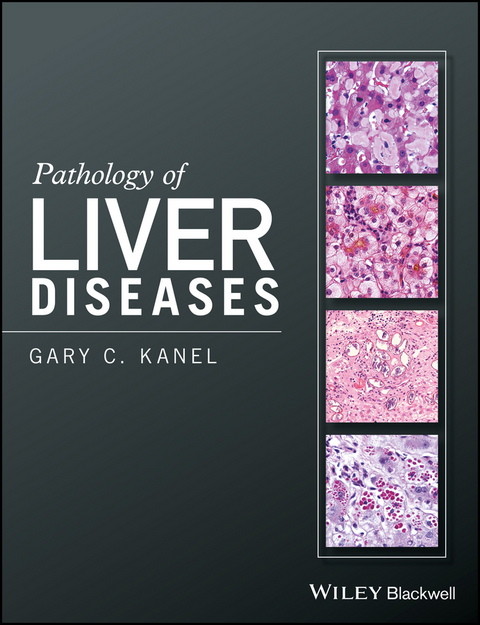
Pathology of Liver Diseases is a rapid reference consultation tool that uses both book and online material to present a whole range of liver disorders. The book emphasizes not only the pathology seen in biopsy and surgical material, but also the most pertinent clinical and laboratory findings including epidemiology, etiologic and pathophysiologic concepts, and the differential diagnoses. Key references appear at the end of each chapter.
The book is also accompanied by a companion website:
www.wiley.com/go/kanel/liverpathology
It contains the following online material:
- A complete Reference List.
- A Library that contains over 860 images of the various liver diseases, which adds to over 540 images that are in the book itself.
- Additional Tables that address in detail the grading and staging of various liver diseases such as viral hepatitis and fatty liver diseases.
- 140 Case Examples, which include over 420 images that demonstrate the various ways many of these disease entities clinically present.
- A PowerPoint presentation entitled 'Liver Transplantation - Surgical Procedure', which includes photographs from the operating table of the step-by-step process in liver transplantation.
Pathology of Liver Diseases provides gastroenterologists and pathologists with a multi-media, well-illustrated, and concise guide to the pathology and clinical diagnoses of liver disorders.
Gary C. Kanel, M.D., Clinical Professor of Pathology, Keck Medical Center of USC, Department of Pathology and Laboratory Medicine, Los Angeles, CA, USA
Pathology of Liver Diseases is a rapid reference consultation tool that uses both book and online material to present a whole range of liver disorders. The book emphasizes not only the pathology seen in biopsy and surgical material, but also the most pertinent clinical and laboratory findings including epidemiology, etiologic and pathophysiologic concepts, and the differential diagnoses. Key references appear at the end of each chapter. The book is also accompanied by a companion website: www.wiley.com/go/kanel/liverpathology It contains the following online material: A complete Reference List. A Library that contains over 860 images of the various liver diseases, which adds to over 540 images that are in the book itself Additional Tables that address in detail the grading and staging of various liver diseases such as viralhepatitis and fatty liver diseases. 140 Case Examples, which include over 420 images that demonstrate the various ways many of these disease entities clinically present. A PowerPoint presentation entitled "e;Liver Transplantation Surgical Procedure"e;, which includes photographs from the operating table of the step-by-step process in liver transplantation. Pathology of Liver Diseases provides gastroenterologists and pathologists with a multi-media, well-illustrated, and concise guide to the pathology and clinical diagnoses of liver disorders.
Gary C. Kanel, M.D., Clinical Professor of Pathology, Keck Medical Center of USC, Department of Pathology and Laboratory Medicine, Los Angeles, CA, USA
Preface vi
About the companion website viii
Chapter 1 Normal Liver 1
Chapter 2 Viral Hepatitis 24
Chapter 3 Fatty Liver Diseases 50
Chapter 4 Diseases of the Biliary Tract 72
Chapter 5 Non-Viral Infectious Diseases 95
Chapter 6 Granulomatous Hepatitis 123
Chapter 7 Autoimmune Hepatitis 131
Chapter 8 Vascular Disorders 143
Chapter 9 Genetic and Metabolic Hepatic Diseases 162
Chapter 10 Developmental Hepatobiliary Disorders and Cystic Diseases 198
Chapter 11 Drug- and Toxin-Induced Liver Diseases 215
Chapter 12 Liver Transplantation 231
Chapter 13 Hepatic Tumors, Benign 266
Chapter 14 Hepatic Tumors, Malignant 289
Chapter 15 Miscellaneous Hepatic Disorders 337
Index 354
"This is a great addition to liver pathology books. It will be extremely helpful for residents and practicing pathologists who are looking for a book on the practical approach to liver biopsy and resection specimens. The text is descriptive, yet concise and easy to read; the pictures are high quality and the picture legends are helpful in describing the pertinent microscopic details. It is highly recommended for all practicing surgical pathologists" Doody's, October 2017
1
Normal Liver
The liver is a unique organ that has numerous structural and physiological functions. It is most important when discussing liver pathology that one understands first the normal liver histology before one can best understand the basic pathophysiologic concepts of the numerous liver diseases. The pathologist plays a fundamental role in assessing the various morphologic features seen in liver tissue, whether by fine needle aspirates, needle or wedge biopsies, partial hepatectomies, liver explants, or autopsy material. The pathologist also has not only routine but also numerous special histochemical and immunohistologic stains as well. Yet correlating the histologic findings with the most pertinent clinical and laboratory data enables the pathologist to better arrive at a diagnosis and the most pertinent differential possibilities.
This introductory chapter addresses all aspects of the normal liver, reviewing the embryologic development, gross and microscopic features, the pertinent intracytoplasmic components and how their function varies with their location within the hepatic lobule, and the importance of stem cell function within the liver. Additionally the various useful stains and laboratory values will also be presented, as well as a brief outline of how best to organize pathologic readings and signouts of liver biopsy specimens.
Embryology
The hepatic primordium anlage initially appears at the end of the third week of gestation and is first seen as a hollow midline outgrowth stalk (hepatic diverticulum) of the endodermal epithelium at the distal aspect of the foregut. By the fourth week, the diverticulum enlarges from proliferation of the endodermal cell strands (hepatoblasts) and projects cranially into the mesoderm of the septum transversum, eventually giving rise to the liver hepatic parenchyma and intrahepatic ducts. The cephalic end ultimately develops into the right and left hepatic lobes, while the stalk between the diverticulum and foregut narrows and forms the extrahepatic biliary system and gallbladder.
Solid cords are initially formed by proliferating endodermal cells. These eventually anastomose to form vesicles and cribriform tubules with centrally located lumenal structures (biliary canaliculi). The cords eventually merge and develop small channels and capillaries that subdivide the cords to eventually form the hepatic sinusoids. The individual hepatoblasts are progenitor cells that develop into mature hepatocytes, with those immediately adjacent to the portal mesenchyme becoming the ductal plates. The rapid growth rate of the hepatic cords enables the development of sheets of cells (muralium multiplex) that persist until birth, after which the cell sheets narrow to two cells (muralium duplex) and eventually evolve within the first year of life into a one cell thick trabecular cord (muralium simplex). The perisinusoidal cells and Kupffer cells appear by three months gestation.
The mesoderm from the septum transversum initially surrounds the liver and is directly in contact with the lesser curvature of the stomach, duodenum, and ventral body wall. The mesoderm eventually forms the lesser omentum, the falciform, coronary, and triangular ligaments, with a portion developing into the liver (Glisson) capsule. The mesoderm on the liver surface is also in continuity with the peritoneum, and the portion that makes contact with the future diaphragm remains uncovered (bare area). The developing hepatic artery and vagus nerve branches follow the mesoderm along and adjacent to the portal vein.
The mesoderm is the main focus in the development of hematopoiesis, which begins at about 6 weeks and becomes most active during the fifth month of gestation. This process regresses with increase in bone marrow activity. The erythroid precursors are most prominent during fetal development within the hepatic sinusoids while the myeloid and megakaryocytic precursors reside mostly within the portal structures (Figure 1.1). This hematopoiesis is responsible for the enlarged size of the liver (up to 10% body weight by the tenth week of gestation, with the right and left lobes taking up an equal volume), but this size significantly regresses at birth (5% of body weight) at which time only rare small clusters of normoblasts can be seen. By 4 weeks of age hematopoietic activity has usually ceased. Additionally with time the left lobe diminishes in size, and the caudate and quadrate lobes develop as subdivisions of the right lobe.
Figure 1.1 Embryonic development. A developing bile ductule is seen at the border of the portal tract and parenchyma. The portal tract and sinusoids contain hematopoietic precursors (extramedullary hematopoiesis).
The vascular network, originally derived from the development of the vitelline and umbilical veins, occurs at the same time as proliferation of the hepatoblasts, with the sinusoids forming from anastomosis of the hepatic cords and vessels. By the fifth week of gestation most of the major vessels are present and include the right and left umbilical veins, the transverse portal sinus, and the ductus venosus, which shunts blood from the umbilical vein into the inferior vena cava. The portal vein initially develops from the vitelline vein and then subdivides into the right and left branches. The hepatic and portal vein branches divide the parenchyma into the individual lobules and acini. At birth, a sphincter mechanism closes the ductus venosus, resulting in cessation of blood flow through the umbilical vein, with the liver now receiving blood from the left branch of the portal vein.
The biliary apparatus develops from membranous infoldings between the junctional complexes located between individual hepatoblasts and initially appears as intercellular spaces with no distinct wall. The biliary canaliculi are first seen at 6 weeks of gestation, with synthesis of bile occurring by the ninth week and secretion of bile by the twelfth week. The ductal plate, which is initially two layers thick, is formed from the periportal hepatoblasts. A lumen develops by the third month (see Figure 1.1) with eventual formation of double-layered tubular (ductular) structures. The true interlobular bile ducts occur immediately after birth from remodeling of these ductular elements. This biliary network receives its blood supply from a complex of arterioles and capillaries formed from the peribiliary plexus. The extrahepatic biliary tree develops from the stalk of the original hepatic outgrowth.
Individual cell functions become apparent at different stages of the embryologic development. α-Fetoprotein, found in high amounts at birth, initially is seen within the hepatocytes by one month gestation and continues throughout fetal development, with high serum levels at birth. Fatty change (steatosis), glycogen and glycogen synthesis become most apparent by two to three months gestation, with the glycogen eventually diminishing due to rapid glycogenolysis. Hemosiderin is usually seen early on but gradually decreases, with some often occurring in the periportal hepatocytes at birth.
Gross Anatomy
The adult liver weighs from 1200 to 1800 g, dependent on the overall body size, takes up the majority of the right upper abdominal cavity beneath the rib cage, and extends from the right lateral aspect of the abdomen 15–20 cm transversely toward the xiphoid process. Although the weight of the adult liver constitutes about 1.8–3.1% of the total body weight, at birth the liver is larger compared with adjacent thoracic and abdominal viscera and constitutes about 5–6% of the body weight.
Anatomically, the liver has four lobes: right, left, caudate, and quadrate. The right lobe accounts for one-half to two-thirds of the total liver volume and is divided from the left lobe by the falciform ligament on gross inspection; however, functionally the right and left lobes are of about equal size and are divided by a line extending from the inferior vena cava superiorly to the middle of the gallbladder fossa inferiorly.
A total of eight functional segments are present, each having its own vascular supply and biliary drainage: the right posterolateral (VI and VII), right anterolateral (V and VIII), left anterior (IV), left posterior (II and III), and the caudate lobe (I), the latter being a watershed area of both the right and left lobes blood supply (Figure 1.2).
Figure 1.2 Schematic anatomical vascular arrangements of the liver. The liver is divided into eight functional anatomical segments, each having its own vascular supply and biliary drainage: the right posterolateral (VI and VII), right anterolateral (V and VIII), left anterior (IV), left posterior (II and III), and the caudate lobe (I). Source: Wanless IR. Physioanatomic considerations. In: Schiff’s Diseases of the Liver, 11th edn. Oxford: Wiley Blackwell, 2012. Reproduced with permission of John Wiley & Sons.
The portal vein, which is the main route of vascular drainage of the gastrointestinal tract, is formed by merger of the superior mesenteric and splenic veins, with additional blood supply from the coronary and cystic veins. The portal vein divides at the porta hepatis into the right and left main branches. The right branch divides early into anterior and posterior segments, while the left branch divides into the pars transversus, which extends to the left in the porta hepatis, and the pars umbilicus, which descends into the umbilical fossa. The caudate...
| Erscheint lt. Verlag | 2.3.2017 |
|---|---|
| Sprache | englisch |
| Themenwelt | Medizin / Pharmazie ► Allgemeines / Lexika |
| Medizinische Fachgebiete ► Innere Medizin ► Hepatologie | |
| Studium ► 2. Studienabschnitt (Klinik) ► Pathologie | |
| Schlagworte | biopsy • Book • chapter normal • Companion • Diseases • disorders • emphasizes • Fatty • Gastroenterologie • Gastroenterologie u. Hepatologie • Gastroenterology & Hepatology • hepatic • Hepatologie • hepatology • Index • Lebererkrankung • Liver • Malignant • Medical Science • Medizin • Miscellaneous • Pathologie • Pathology • Rapid • reference consultation • surgical • vi • Viral Hepatitis |
| ISBN-13 | 9781118895009 / 9781118895009 |
| Informationen gemäß Produktsicherheitsverordnung (GPSR) | |
| Haben Sie eine Frage zum Produkt? |
 EPUB (Adobe DRM)
Kopierschutz: Adobe-DRM
Adobe-DRM ist ein Kopierschutz, der das eBook vor Mißbrauch schützen soll. Dabei wird das eBook bereits beim Download auf Ihre persönliche Adobe-ID autorisiert. Lesen können Sie das eBook dann nur auf den Geräten, welche ebenfalls auf Ihre Adobe-ID registriert sind.
Details zum Adobe-DRM
Dateiformat: EPUB (Electronic Publication)
EPUB ist ein offener Standard für eBooks und eignet sich besonders zur Darstellung von Belletristik und Sachbüchern. Der Fließtext wird dynamisch an die Display- und Schriftgröße angepasst. Auch für mobile Lesegeräte ist EPUB daher gut geeignet.
Systemvoraussetzungen:
PC/Mac: Mit einem PC oder Mac können Sie dieses eBook lesen. Sie benötigen eine
eReader: Dieses eBook kann mit (fast) allen eBook-Readern gelesen werden. Mit dem amazon-Kindle ist es aber nicht kompatibel.
Smartphone/Tablet: Egal ob Apple oder Android, dieses eBook können Sie lesen. Sie benötigen eine
Geräteliste und zusätzliche Hinweise
Buying eBooks from abroad
For tax law reasons we can sell eBooks just within Germany and Switzerland. Regrettably we cannot fulfill eBook-orders from other countries.
aus dem Bereich


