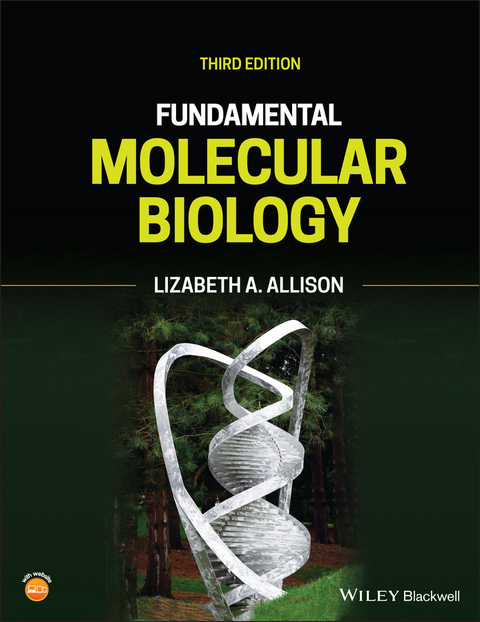
Fundamental Molecular Biology (eBook)
John Wiley & Sons (Verlag)
9781119156314 (ISBN)
Discover a focused and up to date exploration of foundational and core concepts in molecular biology
The newly revised Third Edition of Fundamental Molecular Biology delivers a selective and precise treatment of essential topics in molecular biology perfect for allowing students to develop an accurate understanding of the applications of the field. The book applies the process of discovery-observations, questions, experimental designs, results, and conclusions-with an emphasis on the language of molecular biology. Readers will easily focus on the key ideas they need to succeed in any introductory molecular biology course.
Fundamental Molecular Biology provides students with the most up to date techniques and research used by molecular biologists today. Readers of the book will have the support and resources they need to develop a concrete understanding of core and foundational concepts of molecular biology, without being distracted by outdated or peripheral material.
Readers will also benefit from the inclusion of:
- A thorough introduction to and comparison of eukaryotic and prokaryotic organisms illustrating the variation of cellular processes across organisms
- Tool boxes exploring up to date experimental methods and techniques used by molecular biologists
- Focus boxes providing detailed treatment of topics that delve further into experimental strategies
- Disease boxes placing complex regulatory pathways in their relevant context and illustrating key principles of molecular biology
Perfect for instructors and professors of introductory molecular biology courses, Fundamental Molecular Biology will also earn a place in the libraries of anyone seeking to improve their understanding of molecular biology with an insightful and well-grounded treatment of the core principles of the subject.
Lizabeth Allison is currently the Dorman Family Term Distinquished Professor of Biology at the College of William and Mary. Recently she was honored by the State Council on Higher Education in Virginia with the 'Commonweatlh's Outstanding Faculty' award. Dr. Allisons's award-winning dedication to her students and to the art of teaching are well-reflected in her textbook, the first edition of which has been adopted for use by colleges and universities across the United States and Europe.
Fundamental Molecular Biology Discover a focused and up to date exploration of foundational and core concepts in molecular biologyThe newly revised Third Edition of Fundamental Molecular Biology delivers a selective and precise treatment of essential topics in molecular biology perfect for allowing students to develop an accurate understanding of the applications of the field. The book applies the process of discovery-observations, questions, experimental designs, results, and conclusions-with an emphasis on the language of molecular biology. Readers will easily focus on the key ideas they need to succeed in any introductory molecular biology course.Fundamental Molecular Biology provides students with the most up to date techniques and research used by molecular biologists today. Readers of the book will have the support and resources they need to develop a concrete understanding of core and foundational concepts of molecular biology, without being distracted by outdated or peripheral material.Readers will also benefit from the inclusion of:A thorough introduction to and comparison of eukaryotic and prokaryotic organisms illustrating the variation of cellular processes across organismsTool boxes exploring up to date experimental methods and techniques used by molecular biologistsFocus boxes providing detailed treatment of topics that delve further into experimental strategiesDisease boxes placing complex regulatory pathways in their relevant context and illustrating key principles of molecular biologyPerfect for instructors and professors of introductory molecular biology courses, Fundamental Molecular Biology will also earn a place in the libraries of anyone seeking to improve their understanding of molecular biology with an insightful and well-grounded treatment of the core principles of the subject.
Lizabeth Allison is currently the Dorman Family Term Distinquished Professor of Biology at the College of William and Mary. Recently she was honored by the State Council on Higher Education in Virginia with the "Commonweatlh's Outstanding Faculty" award. Dr. Allisons's award-winning dedication to her students and to the art of teaching are well-reflected in her textbook, the first edition of which has been adopted for use by colleges and universities across the United States and Europe.
Cover 1
Title page 3
Half-Tile page 5
Copyright page 6
Contents 7
About the Companion Website 27
1 The Beginnings of Molecular Biology 29
1.1 Introduction 29
1.2 Insights into the nature of the hereditary material 32
Mendel’s laws of inheritance 32
The chromosome theory of inheritance 34
The transforming principle is DNA 34
Creativity in approach leads to the one gene–one enzyme hypothesis 37
The importance of technological advances: The Hershey–Chase experiment 39
1.3 A model for the structure of DNA: The DNA double helix 40
1.4 The central dogma of molecular biology 42
1.5 An evolutionary framework for heredity 43
Selectionist (Neo-Darwinian) theory 43
The nearly neutral theory of molecular evolution 43
Chapter summary 44
Analytical questions 45
Discovery questions 45
Bibliography 46
2 The Structure of DNA 47
2.1 Introduction 47
2.2 Primary structure: the components of nucleic acids 48
Five-carbon sugars 49
Nitrogenous bases 49
The phosphate functional group 50
Nucleosides and nucleotides 50
Nomenclature of nucleotides 51
The length of RNA and DNA chains 51
Significance of 5 and 3 52
2.3 Secondary structure of DNA 52
Hydrogen bonds form between the bases 53
Base stacking provides chemical stability to the DNA double helix 54
Structure of the Watson–Crick DNA double helix 56
Major and minor grooves 56
Distinguishing between features of alternative double-helical structures 57
DNA can undergo reversible strand separation 60
2.4 Unusual DNA secondary structures 64
Slipped structures 64
Focus Box 2.1 65
Cruciform structures 66
Triple helix DNA 67
G-quadruplex 68
Disease Box 2.1 69
2.5 Tertiary structure of DNA 69
Supercoiling of DNA 69
What is the significance of supercoiling in vivo? 71
Chapter summary 72
Analytical questions 73
Discovery questions 73
Real data questions 73
Bibliography 74
3 The Versatility of RNA 75
3.1 Introduction 75
3.2 RNA is involved in a wide range of cellular processes 76
3.3 Structural motifs of RNA 78
Secondary structure of RNA 78
tRNA structure: important insights into RNA structural motifs 81
Common tertiary structure motifs in RNA 84
Kinetics of RNA folding 86
3.4 The discovery of RNA catalysis 88
Focus Box 3.1 91
Tetrahymena self-splicing RNA 92
RNase P is a ribozyme 93
Ribozymes catalyze a variety of chemical reactions 94
3.5 RNA-based genomes 98
Eukaryotic RNA viruses 98
Disease Box 3.1 99
Retroviruses 101
RNA bacteriophage 102
Viroids and other subviral pathogens 102
Chapter summary 102
Analytical questions 103
Discovery questions 103
Real data questions 104
Bibliography 104
4 Protein Structure and Folding 107
4.1 Introduction 107
4.2 Primary structure: amino acids and the genetic code 108
The 22 genetically encoded amino acids found in proteins 108
Protein primary structure 108
Translating the genetic code 111
The 21st and 22nd genetically encoded amino acids 112
Codon bias 114
D- and L-amino acids in nature 114
4.3 The three-dimensional structure of proteins 116
Secondary structure 117
Tertiary structure 117
Quaternary structure 121
Intrinsically disordered proteins 122
4.4 Protein function and regulation of activity 126
Enzymes are biological catalysts 127
Regulation of protein activity by post-translational modifications 129
Allosteric regulation of protein activity 131
4.5 Protein folding and misfolding 133
Molecular chaperones 133
Protein degradation pathways in eukaryotic cells 134
Protein degradation in prokaryotic cells 137
Phase separation 138
Protein misfolding diseases 138
Disease Box 4.1 140
Chapter summary 143
Analytical questions 144
Discovery questions 144
Real data questions 144
Bibliography 144
5 Genome Organization and Evolution 147
5.1 Introduction 147
5.2 Genome organization varies in different organisms 148
Are there two or three domains of life? 148
Two classes of genome size: small and compact or large and expanded 149
5.3 Packaging of the eukaryotic genome 151
Histones are small, positively charged proteins 152
Nucleosomes are the fundamental packing unit of chromatin 154
Higher-order chromatin structure 155
Further packaging of DNA involves loop domains 157
Fully condensed chromatin: metaphase chromosomes 158
Organization and expression of the genetic material 163
5.4 The majority of the eukaryotic genome is noncoding 165
Interspersed elements are primarily transposable elements 167
Tandem repetitive sequences are arranged in arrays with variable numbers of repeats 167
5.5 Lateral gene transfer contributes to genome evolution 168
Organelle genomes reflect an endosymbiont origin 169
Disease Box 5.1 171
Intercompartmental DNA transfer 172
5.6 Prokaryotic and viral genome organization 173
Bacterial genome organization 173
Plasmid DNA 174
Archaeal genome organization 175
Viral genome organization 176
Chapter summary 179
Analytical questions 179
Discovery questions 180
Real data questions 180
Bibliography 180
6 DNA Replication and Telomere Maintenance 183
6.1 Introduction 183
6.2 Early insights into the mode of bacterial DNA replication 184
The Meselson–Stahl experiment 184
Visualization of replicating bacterial DNA 186
6.3 DNA polymerases are the enzymes that catalyze DNA synthesis from 5 to 3 186
Semidiscontinuous DNA replication 188
6.4 The bacterial replisome 190
Bacterial DNA polymerases have multiple functions 190
Initiation of replication in bacteria 191
Bacterial replication is mediated by the replisome 192
Topoisomerases relax supercoiled DNA 193
Is leading strand synthesis really “continuous”? 196
6.5 The eukaryotic replisome 197
Mapping origins of replication 197
Selective activation of eukaryotic origins of replication 198
Replication factories 199
Histone removal at the origins of replication 200
Prereplication complex formation and replication licensing 201
Focus Box 6 . 1 201
Duplex unwinding at replication forks 204
RNA priming of leading strand and lagging strand DNA synthesis 204
Polymerase switching 205
Elongation of leading strands and lagging strands 205
PCNA: a sliding clamp with many protein partners 206
Proofreading by replicative DNA polymerases 207
Maturation of nascent DNA strands 208
Histone deposition on newly synthesized DNA 210
Topoisomerase untangles the newly synthesized DNA 210
Disease Box 6.1 212
6.6 Alternative modes of circular DNA replication 212
Rolling circle replication 212
Models for organelle DNA replication 213
Disease Box 6.2 215
6.7 Telomere maintenance: the role of telomerase in DNA replication, aging, and cancer 215
Telomeres 215
Solution to the end replication problem 216
Maintenance of telomeres by telomerase 217
Other modes of telomere maintenance 219
Recruitment of telomerase to telomeres 219
Regulation of telomerase activity 220
Telomerase, aging, and cancer 221
Disease Box 6.3 224
Chapter summary 226
Analytical questions 227
Discovery questions 228
Real data questions 228
Bibliography 228
7 DNA Repair Pathways 231
7.1 Introduction 231
7.2 Mutations and DNA damage 232
Transitions and transversions can lead to silent, missense, or nonsense mutations 232
Expansion of trinucleotide repeats leads to genetic instability 235
General classes of DNA damage 235
7.3 Lesion bypass 238
7.4 Direct reversal of DNA damage 240
Reversal of thymine–thymine dimers by DNA photolyase 240
Damage reversal by DNA methyltransferase 241
Removal of DNA–protein cross-links by the SPRTN protease 241
7.5 Repair of single base changes and structural distortions by removal of DNA damage 242
Base excision repair 243
Mismatch repair 244
Disease Box 7.1 246
Nucleotide excision repair 248
Disease Box 7.2 250
7.6 Double-strand break repair by removal of DNA damage 253
Homologous recombination 253
Disease Box 7.3 254
Nonhomologous end-joining 256
Analytical questions 258
Discovery and Real Data Questions 259
Bibliography 259
8 Transcription in Bacteria 261
8.1 Introduction 261
8.2 Mechanism of transcription 262
Bacterial promoter structure 262
Structure of bacterial RNA polymerase 263
How does RNA polymerase find a gene promoter? 267
Initiation of transcription 268
Elongation 269
Focus Box 8.1 272
Proofreading 273
Termination of transcription 274
8.3 Insights into gene regulation from the lactose (lac) operon 275
The Jacob–Monod operon model of gene regulation 276
Operons are common in prokaryotes 276
Characterization of the lac repressor 277
Lactose (lac) operon regulation 277
The lac promoter and lacZ structural gene are widely used in molecular biology research 282
8.4 Mode of action of transcriptional regulators 282
Cooperative binding of proteins to DNA 282
Allosteric modifications and DNA binding 282
DNA looping 285
8.5 Control of gene expression by RNA 287
Differential folding of RNA: transcriptional attenuation of the tryptophan operon 287
Riboswitches 288
Riboswitch ribozymes 290
8.6 Gene regulatory networks 291
Alternative sigma factors 291
Quorum sensing 293
Chapter summary 294
Analytical questions 295
Discovery questions 296
Real data questions 296
Bibliography 296
9 Transcription in Eukaryotes 299
9.1 Introduction 299
9.2 Overview of transcriptional regulation 300
Chromosomal territories and transcription factories 300
Disease Box 9.1 302
Eukaryotes have different types of RNA polymerase 303
9.3 Protein-coding gene regulatory elements 304
Structure and function of promoter elements 304
Structure and function of long-range regulatory elements 307
Disease Box 9.2 310
9.4 The general transcription machinery and mechanism of transcription 312
Components of the general transcription machinery 312
Structure of RNA polymerase II 313
General transcription factors and preinitiation complex formation 314
Mediator: a molecular drawbridge 316
Initiation of transcription 319
Elongation 322
Proofreading and backtracking 324
9.5 The role of specific transcription factors in gene regulation 325
Transcription factors mediate gene-specific transcriptional activation or repression 325
Transcription factors are modular proteins 325
DNA-binding domain motifs 326
Focus Box 9.1 327
Disease Box 9.3 331
Transactivation domain 334
Dimerization domain 335
Pioneer factors 335
9.6 Transcriptional coactivators and corepressors 335
Chromatin modification complexes 336
Focus Box 9.2 338
Linker histone variants 340
Chromatin remodeling complexes 340
9.7 Transcription complex assembly: the enhanceosome model versus the “hit-and-run” model 343
Enhanceosome model 344
Hit-and-run model 344
Merging of models 345
Transcription elongation through the nucleosomal barrier 345
Termination 347
Disease Box 9.4 348
9.8 Regulated nuclear import and export of transcription factors 349
Focus Box 9.3 349
Karyopherins mediate nuclear import and export 350
Nuclear import pathway 351
Nuclear export pathway 354
Regulated nuclear import and signal transduction pathways 355
Chapter summary 359
Analytical questions 361
Discovery questions 361
Real data questions 361
Bibliography 362
10 Epigenetic Mechanisms of Gene Regulation 367
10.1 Introduction 367
10.2 Epigenetic markers 369
Cytosine DNA methylation marks genes for silencing 369
CpG islands are found near gene promoters 371
Stable maintenance of histone modifications 372
10.3 Genomic imprinting 374
Disease Box 10.2 375
Disease Box 10.3 377
Establishing and maintaining the imprint 380
Mechanisms of monoallelic expression 381
Genomic imprinting is essential for normal development 383
Origins of genomic imprinting 384
10.4 X chromosome inactivation 384
Random X chromosome inactivation in mammals 385
Molecular mechanisms for stable maintenance of X chromosome inactivation 386
Is there monoallelic expression of all X-linked genes? 387
10.5 Epigenetic control of transposable elements 388
Barbara McClintock’s discovery of mobile genetic elements in maize 389
DNA transposons have a wide host range 390
Disease Box 1 0.4 392
DNA transposons move by a “cut-and-paste” mechanism 393
Retrotransposons move by a “copy-and-paste” mechanism 394
Some LTR retrotransposons are active in the mammalian genome 394
Non-LTR retrotransposons include LINEs and SINEs 395
Methylation of transposable elements 397
Silencing of transposable elements by small regulatory RNAs 397
10.6 Epigenetics and nutritional legacy 399
A diet lacking folic acid can activate a retrotransposon in mice 399
Paternal epigenetic effects 400
Does transgenerational epigenetic inheritance occur in humans? 400
10.7 Allelic exclusion 401
Yeast mating-type switching and silencing 401
Antigen switching in trypanosomes 404
Disease Box 10.5 405
V(D)J recombination and the adaptive immune response 410
Focus Box 10.1 412
Chapter summary 415
Analytical questions 417
Discovery questions 417
Real data questions 417
Bibliography 418
11 RNA Processing and Posttranscriptional Gene Regulation 421
11.1 Introduction 421
11.2 The discovery of split genes 422
Focus Box 11.1 424
11.3 Splicing occurs by a variety of mechanisms 425
Group I introns require an external G cofactor for splicing 425
Group II introns require an internal bulged A for splicing 425
Mobile group I and II introns 428
Some archaeal introns are spliced by an endoribonuclease 429
Some nuclear tRNA genes contain an intron 430
11.4 Cotranscriptional processing of nuclear pre-mRNA 430
Addition of the 5 7-methylguanosine cap 432
N6-methyladenosine (m6A) modification occurs cotranscriptionally 433
Termination and polyadenylation 433
Alternative polyadenylation 436
Disease Box 11.1 436
Splicing 437
Disease Box 11.2 439
Disease Box 11.3 444
11.5 Alternative splicing 446
Effects of alternative splicing on gene expression 447
Regulation of alternative splicing 447
Focus Box 11.2 447
trans-splicing 449
11.6 RNA editing 452
RNA editing in trypanosomes 452
RNA editing in mammals 455
Disease Box 11.4 457
11.7 Post-transcriptional gene regulation by RNAi 459
Overview of the siRNA-induced RNAi pathway 460
The discovery of RNAi 461
The RNAi machinery 462
The discovery of miRNA in Caenorhabditis elegans 464
Processing of miRNAs 464
miRNAs are loaded into an argonaute (Ago) silencing complex 466
miRNAs target mRNA for degradation or translational inhibition 466
miRNAs can regulate a wide range of target mRNAs 467
What determines whether translation is blocked or the mRNA is “sliced”? 467
11.8 RNA turnover in the nucleus and cytoplasm 468
RNA quality control and the nuclear exosome 468
Cytoplasmic RNA turnover 469
Chapter summary 471
Analytical questions 474
Discovery questions 474
Real data questions 475
Bibliography 475
12 The Mechanism of Translation 479
12.1 Introduction 479
12.2 Ribosome structure and assembly 479
Structure of ribosomes 480
The nucleolus 482
Ribosome biogenesis 484
12.3 Aminoacyl-tRNA synthetases 485
Aminoacyl-tRNA charging 486
Proofreading activity of aminoacyl-tRNA synthetases 486
12.4 Initiation of translation 487
Ternary complex formation and loading onto the 40S ribosomal subunit 488
Loading the mRNA on the 40S ribosomal subunit 488
Scanning and AUG recognition 490
Tool Box 12.1 491
Joining of the 40S and 60S ribosomal subunits 492
12.5 Elongation and events in the ribosome tunnel 492
Disease Box 12.1 492
Decoding the message 494
Peptide bond formation and translocation 495
Peptidyltransferase activity 495
Biochemical evidence that 23S rRNA is a ribozyme 496
Structural evidence that rRNA forms the active site of the ribosome 496
Events in the ribosome tunnel 499
12.6 Termination of translation 500
12.7 Translational and post-translational control 502
Phosphorylation of eIF2 blocks ternary complex formation 502
eIF2 phosphorylation is mediated by four distinct protein kinases 503
Chapter summary 505
Analytical questions 507
Discovery questions 507
Real data questions 507
Bibliography 507
13 Recombinant DNA Technology and Genetically Modified Organisms 511
13.1 Introduction 512
13.2 The beginnings of recombinant DNA technology 512
Insights from bacteriophage lambda () cohesive sites 512
Insights from bacterial modification and restriction systems 513
The first cloning experiments 514
13.3 Cutting and joining DNA 515
Focus Box 13.1 516
Major classes of restriction endonucleases 516
Recognition sequences for type II restriction endonucleases 517
DNA ligase joins linear pieces of DNA 520
13.4 Molecular cloning 521
Choice of vector is dependent on insert size and application 521
Plasmid DNA as a vector 522
Tool Box 13.1 523
Bacteriophage lambda () as a vector 527
Artificial chromosome vectors 528
Tool Box 13.2 528
Sources of DNA for cloning 531
Constructing DNA libraries 532
Tool Box 13.3 532
13.5 Library screening and probes 534
Types of DNA and RNA probes 535
Labeling of probes 535
Tool Box 13.4 536
Tool Box 13.5 537
Library screening 539
Screening of expression libraries 540
13.6 Restriction mapping and RFLP analysis 540
Restriction mapping 541
Tool Box 13.6 541
Restriction fragment length polymorphism (RFLP) 542
Tool Box 13.7 544
Disease Box 13.1 546
13.7 DNA sequencing 547
Manual DNA sequencing by the Sanger “dideoxy” DNA method 547
Automated DNA sequencing 548
Next-generation sequencing 549
13.8 Introduction to genetically modified organisms 551
13.9 Transgenic mice: pronuclear microinjection 552
How to make a transgenic mouse 552
Inducible transgenic mice 555
Tool Box 13.8 556
13.10 Gene targeting in mouse embryonic stem cells 557
Knockout mice 558
Knockin mice 561
Knockdown mice 562
Conditional knockout and knockin mice 562
13.11 CRISPR-Cas gene editing 563
The CRISPR-Cas adaptive immune system 564
Applications of CRISPR-Cas 564
A mouse for any need 567
13.12 Applications of genetically modified animals 567
Transgenic nonhuman primates 567
Transgenic livestock and gene pharming 568
Gene drives 569
13.13 Cloning by nuclear transfer 570
Genetic equivalence of somatic cell nuclei: frog cloning experiments 571
Cloning of mammals by nuclear transfer 572
“Breakthough of the year”: the cloning of Dolly 572
Method for cloning by nuclear transfer 573
Source of mitochondrial DNA (mtDNA) in clones 575
Why is cloning by nuclear transfer inefficient? 576
Focus Box 13.2 578
Applications of cloning by nuclear transfer 580
13.14 Transgenic plants 583
Focus Box 13.3 584
T-DNA-mediated gene delivery 585
Electroporation and microballistics 585
Chapter summary 586
Analytical questions 589
Bibliography 590
14 Tools for Analyzing Gene Organization, Expression, and Function 593
14.1 Introduction 593
14.2 DNA typing 594
Focus Box 14.1 595
DNA polymorphisms: the basis of DNA typing 595
Minisatellite analysis 596
Classic “DNA fingerprinting”: minisatellite analysis with a multilocus probe 596
Polymerase chain reaction–based analysis 598
Short tandem repeat (STR) analysis 599
Mitochondrial DNA analysis 600
Y chromosome analysis 601
Random amplification of polymorphic DNA (RAPD) analysis 601
14.3 Genomics, proteomics, and beyond 602
What is bioinformatics? 602
Genomics and synthetic genomics 604
Proteomics 605
The age of “-omics” and systems biology 605
14.4 Whole-genome sequencing 605
Clone-by-clone genome assembly approach 606
Whole-genome shotgun approach 606
Rough drafts versus finished sequences 607
Comparative analysis of genomes 608
Focus Box 14.2 609
The human family 611
What is a gene, and how many are there in the human genome? 611
From genes to gene expression 612
Focus Box 14.3 613
Tool Box 14.1 617
14.5 Reporter genes 618
Commonly used reporter genes 619
Analysis of gene regulation 619
Tool Box 14.2 620
Purification and detection tags: fusion proteins 622
Tool Box 14.3 624
Fluorescent protein tags 625
Tool Box 14.4 626
14.6 Transcriptomics: RNA expression and localization 630
Northern blot hybridization 631
RNase protection assay (RPA) 632
In Situ hybridization 633
Reverse transcription–PCR 634
Quantitative real-time PCR (Q-PCR) 634
DNA microarrays 635
RNA sequencing (RNA-seq) 637
In Situ transcriptomics 638
14.7 Proteomics: protein expression and localization 638
Tool Box 14.5 639
Tool Box 14.6 642
Western blot 638
In Situ analysis 643
Enzyme-linked immunosorbent assay (ELISA) 644
Protein arrays 644
Mass spectrometry 645
Focus Box 14.4 648
14.8 Analysis of nucleic acid–protein interactions 649
Electrophoretic mobility shift assay (EMSA) 649
DNase I footprinting 649
Chromatin immunoprecipitation (ChIP) assay 650
Cross-linking and immunoprecipitation (CLIP) 651
14.9 Analysis of protein–protein interactions 652
Pull-down assay 652
Coimmunoprecipitation assay 653
Yeast two-hybrid assay 653
Fluorescence resonance energy transfer (FRET) 654
Proximity-dependent biotinylation (BioID) 655
14.10 Structural analysis of proteins 655
X-ray crystallography 655
Cryoelectron microscopy (Cryo-EM) 656
Nuclear magnetic resonance (NMR) spectroscopy 656
Atomic force microscopy (AFM) 657
Chapter summary 658
Analytical questions 661
Bibliography 662
15 Medical Molecular Biology 665
15.1 Introduction 665
15.2 Genomic medicine 666
Genome-wide association studies (GWAS) and personalized medicine 666
Single nucleotide polymorphisms 666
Structural variants 667
Disease Box 15.1 668
Gene polymorphisms and human behavior 669
Aggressive, impulsive, and violent behavior 670
Schizophrenia susceptibility loci 672
The human microbiome 672
15.3 Molecular biology of cancer 672
Activation of proto-oncogenes and oncogenes 675
Focus Box 15.1 678
Inactivation of tumor suppressor genes 679
Disease Box 15.2 680
Inappropriate expression of noncoding RNAs in cancer 683
Focus Box 15.2 684
Chromosomal rearrangements and cancer 686
Viruses and cancer 688
Disease Box 15.3 689
Chemical carcinogenesis 691
15.4 Gene therapy 694
Progress in gene therapy 694
Vectors for somatic cell gene therapy 694
Disease Box 15.4 695
Disease Box 15.5 695
Focus Box 15.3 697
Enhancement genetic engineering 700
Gene therapy for inherited immunodeficiency syndromes 700
Focus Box 15.4 701
Cystic fibrosis gene therapy 702
Focus Box 15.5 704
HIV-1 gene therapy 703
The future of gene therapy 706
Analytical questions 709
Real data questions 710
Bibliography 710
Appendix 713
Chapter 1 713
Analytical questions 713
Discovery questions 714
Chapter 2 714
Analytical questions 714
Discovery questions 715
Real data questions 715
Chapter 3 715
Analytical questions 715
Discovery questions 716
Real data questions 716
Chapter 4 717
Analytical questions 717
Discovery questions 717
Real data questions 717
Chapter 5 718
Analytical questions 718
Discovery questions 718
Real data questions 718
Chapter 6 719
Analytical questions 719
Discovery questions 720
Real data questions 721
Chapter 7 721
Analytical questions 721
Discovery and real data questions 722
Chapter 8 722
Analytical questions 722
Discovery questions 723
Real data questions 724
Chapter 9 724
Analytical questions 724
Discovery questions 725
Real data questions 725
Chapter 10 725
Analytical questions 726
Discovery questions 727
Real data questions 727
Chapter 11 727
Analytical questions 727
Discovery questions 728
Real data questions 729
Chapter 12 729
Analytical questions 729
Discovery questions 730
Real data questions 730
Chapter 13 730
Analytical questions 730
Chapter 14 732
Analytical questions 732
Chapter 15 734
Analytical questions 734
Real data questions 734
Glossary 735
Index 785
EULA 812
| Erscheint lt. Verlag | 10.5.2021 |
|---|---|
| Sprache | englisch |
| Themenwelt | Naturwissenschaften ► Biologie ► Biochemie |
| Naturwissenschaften ► Biologie ► Mikrobiologie / Immunologie | |
| Naturwissenschaften ► Biologie ► Zellbiologie | |
| Schlagworte | Biowissenschaften • Cell & Molecular Biology • foundational molecular biology</p> • introduction to molecular biology • introductory molecular biology • intro molecular biology • Life Sciences • <p>Molecular biology textbook • Molecular Biology • Molecular Biology Basics • molecular biology foundations • molecular biology fundamentals • Molekularbiologie • Zell- u. Molekularbiologie |
| ISBN-13 | 9781119156314 / 9781119156314 |
| Informationen gemäß Produktsicherheitsverordnung (GPSR) | |
| Haben Sie eine Frage zum Produkt? |
 PDF (Adobe DRM)
Kopierschutz: Adobe-DRM
Adobe-DRM ist ein Kopierschutz, der das eBook vor Mißbrauch schützen soll. Dabei wird das eBook bereits beim Download auf Ihre persönliche Adobe-ID autorisiert. Lesen können Sie das eBook dann nur auf den Geräten, welche ebenfalls auf Ihre Adobe-ID registriert sind.
Details zum Adobe-DRM
Dateiformat: PDF (Portable Document Format)
Mit einem festen Seitenlayout eignet sich die PDF besonders für Fachbücher mit Spalten, Tabellen und Abbildungen. Eine PDF kann auf fast allen Geräten angezeigt werden, ist aber für kleine Displays (Smartphone, eReader) nur eingeschränkt geeignet.
Systemvoraussetzungen:
PC/Mac: Mit einem PC oder Mac können Sie dieses eBook lesen. Sie benötigen eine
eReader: Dieses eBook kann mit (fast) allen eBook-Readern gelesen werden. Mit dem amazon-Kindle ist es aber nicht kompatibel.
Smartphone/Tablet: Egal ob Apple oder Android, dieses eBook können Sie lesen. Sie benötigen eine
Geräteliste und zusätzliche Hinweise
Buying eBooks from abroad
For tax law reasons we can sell eBooks just within Germany and Switzerland. Regrettably we cannot fulfill eBook-orders from other countries.
aus dem Bereich