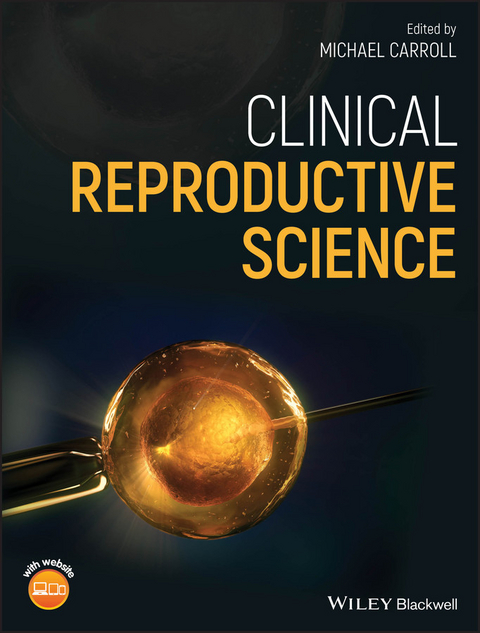
The comprehensive and authoritative guide to clinical reproductive science
The field of clinical reproductive science continues to evolve; this important resource offers the basics of reproductive biology as well as the most recent advance in clinical embryology. The author - a noted expert in the field - focuses on the discipline and covers all aspects of this field. The text explores causes of male and female infertility and includes information on patient consultation and assessment, gamete retrieval and preparation, embryo culture, embryo transfer and cryopreservation.
Comprehensive in scope, the text contains an introduction to the field of clinical reproductive science and a review of assisted reproductive technology. The author includes information on a wide range of topics such as gonadal development, the regulation of meiotic cell cycle, the biology of sperm and spermatogenesis, in vitro culture, embryo transfer techniques, fundamentals of fertilisation, oocyte activation and much more. This important resource:
- Offers an accessible guide to the most current research and techniques to the science of clinical reproduction
- Covers the fundamental elements of reproductive science
- Includes information on male and the female reproductive basics - everything from sexual differentiation to foetal development and parturition
- Explores the long-term health of children conceived through IVF
- Contains the newest developments in assisted reproductive technology
Clinical Reproductive Science is a valuable reference written for professionals in academia, research and clinical professionals working in the field of reproductive science, clinical embryology and reproductive medicine.
About the Editor
MICHAEL CARROLL, Senior Lecturer in Reproductive Science, School of Healthcare Science, Manchester Metropolitan University, UK
About the Editor MICHAEL CARROLL, Senior Lecturer in Reproductive Science, School of Healthcare Science, Manchester Metropolitan University, UK
List of Contributors xi
About the Editor xv
Preface xvii
Acknowledgements xix
About the Companion Website xxi
Section One Reproductive Science: Fundamentals of Human Reproductive Biology 1
1 Sexual Differentiation, Gonadal Development, and Development of the External Genitalia: A Review of The Regulation of Sexual Differentiation 3
Rebecca M. Perrett
2 Male and Female Reproductive Anatomy 35
Sara Sulaiman and James Coey
3 Fundamentals of Reproductive Endocrinology 45
Derrick Ebot, Haider Hilal, Michael Carroll, and James Coey
4 The Ovaries, Oocytes, and Folliculogenesis 57
Jacques Gilloteaux and James Coey
5 The Human Spermatozoa 65
Allan Pacey and Katrina Williams
6 The Biology of Fertilization 75
Michael Carroll
7 Human Embryo Development: From Zygote Stage to Peri?]Implantation Blastocyst 93
Stéphane Berneau and Michael Carroll
8 The Female Reproductive Tract and Early Embryo Development: A Question of Supply and Demand 99
Henry J. Leese and Daniel R. Brison
Section Two Clinical Reproductive Science: Causes of Male and Female Infertility 109
9 Disorders of Male Reproductive Endocrinology 111
Michael Carroll
10 Disorders of Female Reproductive Endocrinology 125
Mahshid Nickkho?]Amiry and Cheryl T. Fitzgerald
11 Oocyte Aneuploidy and the Maternal Age Effect 133
Mary Herbert
12 Female Reproductive Pathology: Peritoneal, Uterine, and Fallopian Tube Pathologies 147
Kenneth Ma Kin Yue, Rosa Trigas, and Edmond Edi?]Osagie
13 Pathologies of the Male Reproductive Tract 159
Aarush Sajjad, Muhammad A. Akhtar, and Yasmin Sajjad
14 The Impact of Infections on Reproduction and Fertility 177
Val Edwards Jones
15 Nutrition, Fetal Health, and Pregnancy 189
Emma Derbyshire
16 The Embryonic Environment and Developmental Origins of Health 195
Tom P. Fleming and Congshan Sun
17 Lifestyle and Environmental Impacts on Fertility 205
Ana?]Maria Tomova and Michael Carroll
Section Three Clinical Reproductive Science In Practice: IVF and Assisted Reproductive Technologies 215
18 Assessing the Infertile Couple 217
Narmada Katakam, Ruth Arnesen, Caroline Watkins, Bert Stewart, and Luciano G. Nardo
19 Ovarian Stimulation Protocols 231
Nikolaos Tsampras and Cheryl T. Fitzgerald
20 Oocyte Retrieval Techniques and Culture of Oocytes 241
Dawn Yell
21 Sperm Preparation: Strategy and Methodology 251
Stephen Harbottle
22 Diagnostic Semen Analysis: Uncertainty, Clinical Value, and Recent Advances 265
Mathew Tomlinson
23 Surgical Sperm Retrieval 279
Muhammad A. Akhtar, Elizabeth Hester, Solmaz Gul Sajjad, and Yasmin Sajjad
24 In Vitro Fertilization and Intracytoplasmic Sperm Injection 291
Bryan Woodward
25 Morphological Assessment of Embryos in Culture 303
J. Diane Critchlow
26 In Vitro Culture of Gametes and Embryos - The Culture Medium 317
Robbie Kerr
27 Incubators in the Assisted Reproductive Technology Laboratory 333
Louise Hyslop
28 Embryo Transfer Techniques and Improving Embryo Implantation Rates 341
Rachel Cutting
29 Cryopreservation of Gametes and Embryos 351
Tope Adeniyi
30 Preimplantation Genetic Diagnosis and Screening 371
Colleen Lynch and Brendan Ball
31 Long?]Term Follow?]Up of Children Conceived Through In Vitro Fertilization 385
Omar Abdel?]Mannan and Alastair G. Sutcliffe
Index 393
1
Sexual Differentiation, Gonadal Development, and Development of the External Genitalia: A Review of The Regulation of Sexual Differentiation
Rebecca M. Perrett
Introduction
The development of one’s sex comprises ‘sex determination’ – the development of the undifferentiated gonad into testis or ovaries during embryogenesis, followed by ‘sex differentiation’ – the determination of phenotypic sex induced by factors produced by the differentiated gonad. This chapter will highlight the molecular mechanisms underpinning these two processes.
During the first 2 weeks of human embryonic development, the only difference between XX and XY embryos is their karyotype. At the two‐cell stage of the XX zygote, X chromosome inactivation occurs, enabling males and females to have equal transcript levels from the X chromosome (Huynh and Lee 2001). In developing germ cells, the X is reactivated in the female, so both X chromosomes contribute to oogenesis (Sugimoto and Abe 2007).
The Bipotential Gonad
During the fourth week of human development, the urogenital ridges develop as a thickening of the mesodermic mesonephros covered by coelomic epithelium (CE); it is from this structure that the urogenital system and adrenal cortex originate. In the fifth week, or mouse embryonic day (E) 9.5–10.5, the urogenital ridge divides into a urinary and adreno‐gonadal ridge the latter of which forms the gonads and adrenal gland (Swain and Lovell‐Badge 1999). Until the sixth week of human development, or mouse E11.5, the undifferentiated gonads of XX and XY individuals are identical and have the potential to form either ovary or testes (bipotential).
Molecular Determinants of Gonadal Development
A number of factors have been shown to be required for the development of the undifferentiated gonad, as illustrated in Figure 1.1. However, due to the limited studies in human development, mouse studies have revealed several more important factors involved in gonadal development, and these are outlined below.
Figure 1.1 Simplistic illustration of the molecular determinants for gonadal differentiation. In the presence of SRY, SOX9 is upregulated and is responsible for the regulation for testicular development. In the absence of SRY, pro‐ovarian factors regulate ovarian development (see text for more detail).
Empty spiracles homeobox 2 (Emx2)
Emx2 encodes a homeodomain transcription factor expressed in urogenital epithelial cells. Knockout mice completely lack kidneys, gonads, ureters and genital tracts, but the adrenal glands and bladder are normal (Miyamoto et al. 1997), indicating Emx2 acts after division of the urogenital ridge. It may regulate tight junction assembly, allowing migration of the gonadal epithelia to the mesenchyme (Kusaka et al. 2010).
Paired box gene 2 (Pax2)
Pax2 is a transcriptional regulator expressed within the urogenital system during development, in both ductal and mesenchymal components (Torres et al. 1995). Null mice lack kidneys, ureters, and genital tracts, and the Wolffian and Müllerian tracts degenerate.
Transcription factor 2 (Tcf2)
The POU domain containing Tcf2 gene functions in epithelial differentiation (Coffinier et al. 1999; Kolatsi‐Joannou et al. 2001). It is essential for urogenital development, as patients harbouring mutations exhibit genital malformations (Lindner et al. 1999; Bingham et al. 2002).
Steroidogenic factor 1 (Sf1)/Nr5a1
The transcription factor Sf1 is expressed in the hypothalamus, pituitary, gonads, and adrenal glands (Luo et al. 1994; Val et al. 2003). Null mice lack gonads and adrenal glands (Luo et al. 1994; Shinoda et al. 1995). Sf1 also functions later in testis development.
Wilms’ tumour 1 (Wt1)
Wt1 encodes multiple isoforms of a zinc finger protein, which act as transcriptional repressors (Menke et al. 1998) or activators (Lee et al. 1999). The –KTS variant promotes cell survival and proliferation in the indifferent gonad, whereas the +KTS isoform functions in testes differentiation (Hammes et al. 2001). The –KTS isoform activates the sex‐determining region Y (Sry) and Sf1 promoters (Hossain and Saunders 2001; Wilhelm and Englert 2002). Wt1 is expressed in urogenital ridges (Pritchard‐Jones et al. 1990) where it maintains the identity of adreno‐gonadal primordium (AGP) the precursor to the gonads and adrenal primordia (Bandiera et al. 2013). Accordingly, null mice lack kidneys and gonads (Kreidberg et al. 1993).
LIM homeobox 9 (Lhx9)
Knockout of Lhx9, a homeobox protein, causes failure of gonadal development (Birk et al. 2000) and synergizes with Wt1 to regulate Sf1 expression (Birk et al. 2000; Wilhelm and Englert 2002).
Chromobox homologue 2 (Cbx2)
Cbx2 is the mouse homologue of the Drosophila polycomb gene and regulates transcription by altering chromatin structure. Knockout XX mice have small or absent ovaries and XY mice show male–female sex reversal (Katoh‐Fukui et al. 1998). Cbx2 may regulate Sf1 expression in the gonad, as it does in the adrenal gland (Katoh‐Fukui et al. 2005), or it may alter Sry expression directly (Katoh‐Fukui et al. 2012).
CBP/p300 interacting transactivator, with glu/asp‐rich c‐terminal domain, 2 (Cited2)
Cited2 is a transcriptional regulator expressed in the AGP, and later in the CE and underlying mesenchyme of the genital ridge (Bhattacharya et al. 1999; Braganca et al. 2003). It cooperates with Wt1 to stimulate Sf1 expression in the AGP (Val et al. 2007; Buaas et al. 2009), and also ensures Sry levels are sufficient to trigger testis determination.
Gata binding protein 4 (Gata4)
Gata4 is a transcription factor first detected at E11.5 in somatic cells of XX and XY gonads; at E13.5 it is upregulated in XY Sertoli cells and downregulated in interstitial cells and XX gonads (Viger et al. 1998). It is required for gonadal ridge formation (Hu et al. 2013), along with later functions in testicular and ovarian development.
Primordial Germ Cells
Specification
Primordial germ cells (PGCs), the founder cells of the germ cell lineage, are typically established early during embryonic development. Germ cell specification can either occur through the inheritance of germ cell determinants already present in the egg (preformation), as in Drosophila melanogaster and Caenorhabditis elegans, or in response to inductive signals, as for mice and probably all mammals (epigenesis) (Extavour and Akam 2003; Saitou and Yamaji 2012).
Mouse PGCs (mPGCs) originate in the pluripotent proximal epiblast at about E6.0 when they respond to signals from extraembryonic tissues and express Fragilis/Interferon‐induced transmembrane protein 3 (Ifitm3) (Saitou et al. 2002). Bone morphogenetic protein 4 (Bmp4) and 8b from the extraembryonic ectoderm and Bmp2 and wingless‐type MMTV integration site family, member 3 (Wnt3) from the visceral endoderm are critical for specification (Lawson et al. 1999; Ying et al. 2000; Ying and Zhao, 2001; Ohinata et al. 2009). At E6.25, about six of these cells express B‐lymphocyte‐induced maturation protein 1 (Blimp1, also known as PR domain‐containing 1, Prdm1): these cells are PGC precursors (Ohinata et al. 2005), although further cells are recruited to become PGCs before E7.25 (Saitou et al. 2002; McLaren and Lawson 2005; Ohinata et al. 2005). Wnt3 acts via β‐catenin to activate the mesodermal factor T (brachyury), which in turn induces Blimp1 and Prdm14 expression (Aramaki et al. 2013); these are transcriptional repressors which suppress the somatic program while allowing establishment of germ cell character (Saitou et al. 2002; Saitou et al. 2005; Ohinata et al. 2005; Vincent et al. 2005; Yabuta et al. 2006; Seki et al. 2007; Kurimoto et al. 2008; Yamaji et al. 2008). The expression of genes which establish/maintain pluripotency are retained via the epiblast, including Sox2, Nanog, Oct4, and Embryonal stem cell gene 1 (Esg1) (Scholer et al. 1990; Ohinata et al. 2005; Western et al. 2005; Yamaguchi et al. 2005; Yabuta et al. 2006; Chambers et al. 2007).
Following establishment of the germ cell lineage, extensive reprogramming of the genome occurs, i.e. erasure of epigenetic marks such as DNA methylation and establishment of new marks (Surani 2001; Hajkova et al. 2002). Imprinting must be reprogrammed in the germ line, as a maternal allele in one generation may be a paternal allele in the next. PGCs do initially acquire genome wide de novo methylation; however, following entry into the gonadal ridge, there is...
| Erscheint lt. Verlag | 19.6.2018 |
|---|---|
| Sprache | englisch |
| Themenwelt | Medizin / Pharmazie ► Medizinische Fachgebiete |
| Studium ► 1. Studienabschnitt (Vorklinik) ► Histologie / Embryologie | |
| Naturwissenschaften ► Biologie | |
| Schlagworte | Advances • Aspects • authoritative • Basics • Biowissenschaften • Cell & Molecular Biology • clinical embryology • clinical reproductive • Consultation • Continues • Discipline • Editor • Embryologie • Embryology • Expert • explores causes • female • Field • focuses • Guide • important • Information • Life Sciences • medical education • Medical Science • Medizin • Medizinstudium • Patient • Reproductive • Science • Zell- u. Molekularbiologie |
| ISBN-13 | 9781118977248 / 9781118977248 |
| Informationen gemäß Produktsicherheitsverordnung (GPSR) | |
| Haben Sie eine Frage zum Produkt? |
 EPUB (Adobe DRM)
Kopierschutz: Adobe-DRM
Adobe-DRM ist ein Kopierschutz, der das eBook vor Mißbrauch schützen soll. Dabei wird das eBook bereits beim Download auf Ihre persönliche Adobe-ID autorisiert. Lesen können Sie das eBook dann nur auf den Geräten, welche ebenfalls auf Ihre Adobe-ID registriert sind.
Details zum Adobe-DRM
Dateiformat: EPUB (Electronic Publication)
EPUB ist ein offener Standard für eBooks und eignet sich besonders zur Darstellung von Belletristik und Sachbüchern. Der Fließtext wird dynamisch an die Display- und Schriftgröße angepasst. Auch für mobile Lesegeräte ist EPUB daher gut geeignet.
Systemvoraussetzungen:
PC/Mac: Mit einem PC oder Mac können Sie dieses eBook lesen. Sie benötigen eine
eReader: Dieses eBook kann mit (fast) allen eBook-Readern gelesen werden. Mit dem amazon-Kindle ist es aber nicht kompatibel.
Smartphone/Tablet: Egal ob Apple oder Android, dieses eBook können Sie lesen. Sie benötigen eine
Geräteliste und zusätzliche Hinweise
Buying eBooks from abroad
For tax law reasons we can sell eBooks just within Germany and Switzerland. Regrettably we cannot fulfill eBook-orders from other countries.
aus dem Bereich