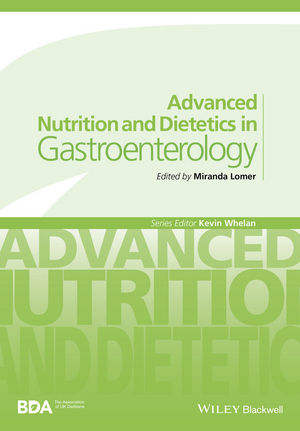
Advanced Nutrition and Dietetics in Gastroenterology (eBook)
John Wiley & Sons (Verlag)
978-1-118-87289-5 (ISBN)
Advanced Nutrition and Dietetics in Gastroenterology provides informative and broad-ranging coverage of the relation between nutrition and diet and the gastrointestinal tract. It explores dietary factors involved in causation of a variety of gastrointestinal disorders, as well as the effects on diet and the treatments available. It also provides an overview of anatomy and physiology, measurement and assessment of function, and dietary components relevant to gastrointestinal health.
ABOUT THE SERIES
Dietary recommendations need to be based on solid evidence, but where can you find this information? The British Dietetic Association and the publishers of the Manual of Dietetic Practice present an essential and authoritative reference series on the evidence base relating to advanced aspects of nutrition and diet in selected clinical specialties. Each book provides a comprehensive and critical review of key literature in its subject. Each covers established areas of understanding, current controversies and areas of future development and investigation, and is oriented around six key themes:
•Disease processes, including metabolism, physiology, and genetics
•Disease consequences, including morbidity, mortality, nutritional epidemiology and patient perspectives
•Nutritional consequences of diseases
•Nutritional assessment, drawing on anthropometric, biochemical, clinical, dietary, economic and social approaches
•Clinical investigation and management
•Nutritional and dietary management
•Trustworthy, international in scope, and accessible, Advanced Nutrition and Dietetics is a vital resource for a range of practitioners, researchers and educators in nutrition and dietetics, including dietitians, nutritionists, doctors and specialist nurses.
About the Editor
Miranda Lomer is a Senior Consultant Dietitian in Gastroenterology at Guy's and St Thomas' NHS Foundation Trust, London and an Honorary Senior Lecturer in Nutritional Sciences at King's College London, UK. She was formerly the Chairperson of the Gastroenterology Specialist Group of the British Dietetic Association.
About the Series Editor
Kevin Whelan is Professor of Dietetics at King's College London. He is also Associate Editor-in-Chief of the Journal of Human Nutrition and Dietetics.Advanced Nutrition and Dietetics in Gastroenterology provides informative and broad-ranging coverage of the relation between nutrition and diet and the gastrointestinal tract. It explores dietary factors involved in causation of a variety of gastrointestinal disorders, as well as the effects on diet and the treatments available. It also provides an overview of anatomy and physiology, measurement and assessment of function, and dietary components relevant to gastrointestinal health. ABOUT THE SERIES Dietary recommendations need to be based on solid evidence, but where can you find this information? The British Dietetic Association and the publishers of the Manual of Dietetic Practice present an essential and authoritative reference series on the evidence base relating to advanced aspects of nutrition and diet in selected clinical specialties. Each book provides a comprehensive and critical review of key literature in its subject. Each covers established areas of understanding, current controversies and areas of future development and investigation, and is oriented around six key themes: Disease processes, including metabolism, physiology, and genetics Disease consequences, including morbidity, mortality, nutritional epidemiology and patient perspectives Nutritional consequences of diseases Nutritional assessment, drawing on anthropometric, biochemical, clinical, dietary, economic and social approaches Clinical investigation and management Nutritional and dietary management Trustworthy, international in scope, and accessible, Advanced Nutrition and Dietetics is a vital resource for a range of practitioners, researchers and educators in nutrition and dietetics, including dietitians, nutritionists, doctors and specialist nurses.
About the Editor Miranda Lomer is a Senior Consultant Dietitian in Gastroenterology at Guy's and St Thomas' NHS Foundation Trust, London and an Honorary Senior Lecturer in Nutritional Sciences at King's College London, UK. She was formerly the Chairperson of the Gastroenterology Specialist Group of the British Dietetic Association. About the Series Editor Kevin Whelan is Professor of Dietetics at King's College London. He is also Associate Editor-in-Chief of the Journal of Human Nutrition and Dietetics.
Preface vii
Foreword ix
Editor biographies x
Contributors xi
Section 1 Physiology and function of the gastrointestinal and hepatobiliary tract 1
1.1 Physiology and function of the mouth 3
1.2 Physiology and function of the oesophagus 8
1.3 Physiology and function of the stomach 15
1.4 Physiology and function of the small intestine 21
1.5 Physiology and function of the colon 28
1.6 Physiology and function of the pancreas 33
1.7 Physiology and function of the hepatobiliary tract 36
1.8 Gastrointestinal microbiota 41
1.9 Gastrointestinal tract and appetite control 48
Section 2 Dietary components relevant to gastrointestinal health 55
2.1 Fibre and gastrointestinal health 57
2.2 Short-chain fermentable carbohydrates 72
2.3 Probiotics and the gastrointestinal microbiota 81
2.4 Prebiotics and gastrointestinal health 87
Section 3 Gastrointestinal disorders 93
3.1 Orofacial granulomatosis and nutrition 95
3.2 Eosinophilic oesophagitis and nutrition 101
3.3 Gastro-oesophageal reflux disease and nutrition 105
3.4 Oesophageal cancer and nutrition 111
3.5 Gastric cancer and nutrition 118
3.6 Gastroparesis and nutrition 127
3.7 Pancreatitis and nutrition 132
3.8 Pancreatic cancer and nutrition 140
3.9 Cystic fibrosis and nutrition 147
3.10 Lymphangiectasia and nutrition 155
3.11 Coeliac disease and nutrition 160
3.12 Inflammatory bowel disease pathogenesis 169
3.13 Inflammatory bowel disease nutritional consequences 180
3.14 Inflammatory bowel disease dietary management 191
3.15 Lactose malabsorption and nutrition 202
3.16 Intestinal failure and nutrition 210
3.17 Stomas and nutrition 218
3.18 Irritable bowel syndrome pathogenesis 226
3.19 Irritable bowel syndrome dietary management 233
3.20 Diverticular disease and nutrition 243
3.21 Constipation and nutrition 249
3.22 Colorectal cancer and nutrition 255
Section 4 Hepatobiliary disorders 263
4.1 Gallbladder disease and nutrition 265
4.2 Primary biliary cirrhosis and primary sclerosing cholangitis and nutrition 273
4.3 Alcohol-related liver disease and nutrition 280
4.4 Autoimmune hepatitis and viral hepatitis and nutrition 284
4.5 Non-alcoholic fatty liver disease and hereditary haemochromatosis and nutrition 290
4.6 Decompensated liver disease and nutrition 296
4.7 Hepatocellular carcinoma and nutrition 309
4.8 Liver transplantation and nutrition 311
Index 317
Chapter 1.1
Physiology and function of the mouth
Michael P. Escudier
King’s College London and Guy’s and St Thomas’ NHS Foundation Trust London, UK
1.1.1 Physiology
The mouth is an important organ as it is the entry point into the gastrointestinal (GI) tract and damage and disease can compromise dietary intake. Even very minor disorders can have a profound impact on nutritional status.
Anatomy
The oral cavity consists of a number of structures.
The lips surround the mouth and comprise skin externally and a mucous membrane (which has many minor salivary glands) internally, which together with saliva ensure adequate lubrication for the purposes of speech and mastication.
The cheeks make up the sides of the mouth and are similar in structure to the lips with which they are continuous but differ in containing a fat pad in the subcutaneous tissue. On the inner surface of each cheek, opposite the upper second molar tooth, is an elevation that denotes the opening of the parotid duct which leads back to the parotid gland located in front of the ear.
The palate (roof of the mouth) is concave and formed by the hard and soft palate. The hard palate is formed by the horizontal portions of the two palatine bones and the palatine portions of the maxillae (upper jaws). The hard palate is covered by thick mucous membrane that is continuous with that of the gingivae. The soft palate is continuous with the hard palate anteriorly and with the mucous membrane covering the floor of the nasal cavity posteriorly. The soft palate is made up of a fibrous sheet together with the glossopalatine and pharyngopalatine muscles and the uvula hangs freely from its posterior border.
The floor of the mouth can only be seen when the tongue is raised and is formed by the mucosa overlying the mylohyoid muscle. In the midline is the lingual frenum (a fold of mucous membrane), on either side of which is the opening of the submandibular duct from the associated submandibular gland.
The gingivae form a collar around the neck of the teeth and consist of mucous membranes connected by thick fibrous tissue to the periosteum surrounding the bones of the jaw. The gingivae are highly vascular and well innervated.
The teeth are important in mastication and in humans, who are omnivores, they enable both plant and animal tissue to be chewed effectively. Each tooth consists of a crown, which varies in shape dependent on the position in the mouth, and one or more roots. There are eight permanent teeth in each quadrant, consisting of two incisors, a canine, two premolars and three molars, resulting in a total of 32 permanent teeth.
The tongue is a highly mobile, muscular organ in the floor of the mouth which is important in speech, chewing and swallowing. In conjunction with the cheeks, it guides food between the upper and lower teeth until mastication is complete. The taste buds situated on the tongue are responsible for the sensation of taste (salt, bitter, sweet and sour).
Function
The main role of the mouth is to prepare food for swallowing via the oesophagus and its subsequent passage to the stomach. The first phase of this process is mastication (chewing) which requires activity in the muscles of mastication (masseter, temporalis, medial and lateral pterygoids and buccinator). Chewing helps digestion by reducing food to small particles and mixing it with the saliva secreted by the salivary glands. The saliva lubricates and moistens dry food whilst the movement of the tongue against the hard palate produces a rounded mass (bolus) of food which can be swallowed.
The saliva required for this process is produced by the three paired major salivary glands (parotid, submandibular and sublingual), together with the many minor salivary glands throughout the oropharynx. The total daily production of saliva is around 500 mL, with the rate of production around 0.35 mL/min at rest which increases to 2.0 mL/min during eating and falls to 0.1 mL/min during sleep. The contribution of the various glands varies at rest and during eating (Table 1.1.1).
Table 1.1.1 Contribution of groups of salivary glands to overall saliva production at rest and during eating
| Resting % | Stimulated % |
| Parotid | 20 | 50 |
| Submandibular | 65 | 49 |
| Sublingual | 8 |
| Minor | 7 | 1 |
In addition to its role in digestion and taste, saliva produces a film which coats the teeth and mucosa and helps to cleanse and lubricate the oral cavity. It also prevents dessication of the oral mucosa and acts as a barrier to oral microbiota [1], both physically and through its antimicrobial activity. The buffers within it also help to maintain optimal pH for the action of the salivary amylase and maintain the structure of the teeth.
Role in digestion
Very little digestion of food occurs in the oral cavity. However, saliva does contain the enzyme amylase which begins the chemical process of digestion by catalysing the breakdown of starch into sugars.
1.1.2 Measurement and assessment of function
Salivary function is the most commonly assessed measure of oral function and can be achieved clinically by using the Challacombe dry mouth scale (Box 1.1.1).
Box 1.1.1 Challacombe dry mouth scale
One point for each feature to a maximum of 10
- Mirror sticks to one buccal mucosa
- Mirror sticks to both buccal mucosa
- Mirror sticks to tongue
- Saliva frothy
- No saliva pooling in floor of mouth
- Tongue shows loss of papillae
- Altered (smooth) gingival architecture
- Glassy appearance to oral mucosa
- Cervical caries (more than two teeth)
- Tongue highly fissured
- Tongue lobulated
- Debris on palate
A reasonable indication of salivary function may be obtained by measuring the resting (unstimulated) salivary flow over a period of 10 min. In health, the rate will normally be around 0.35 mL/min with a range of 0.2–0.5 mL/min. However, this will be reduced in the presence of xerostomic medications or underlying conditions such as Sjögren’s syndrome and a value below 0.2 mL/min requires further investigation and below 0.1 mL/min is indicative of an underlying condition or disease process. Whilst the stimulated parotid flow rate may also be determined, neither is particularly reliable and hence both should only be viewed as indicative rather than diagnostic.
1.1.3 Dental disease
The oral cavity is home to around 500 different microbial species. These bacteria together with saliva and other particles constantly form a sticky, colourless ‘plaque' on the surface of teeth. Brushing and flossing help to remove this layer which is intimately involved in the development of dental caries and gingivitis. Plaque that is not removed can harden and form calculus which requires professional cleaning by a dentist or dental hygienist to prevent the development of periodontal disease which can lead to the destruction of the dental support structures and eventually loss of the affected tooth or teeth.
Whilst both dental caries and periodontal disease have been common for many years, non-carious tooth surface loss, particularly in the form of erosion, is a more recent development and is associated with modern lifestyle and dietary intake.
Dental caries
Dental caries can occur at any stage throughout life and is one of the most common preventable diseases in childhood [2]. In developed countries there has been a fall in the lifetime experience of dental caries by at least 75% since the 1960s but it still remains a concern in children from low socioeconomic groups and immigrants from outside Western Europe.
The occurrence of decay requires the presence of teeth, oral micobiota, carbohydrate and time. Following a meal, oral microbiota in plaque on the tooth surface ferment carbohydrate to organic acids. This rapid acid production lowers the pH at the enamel surface below the level (the critical pH) at which enamel will dissolve. When the carbohydrate supply is exhausted, the pH within plaque rises, due to the outward diffusion of the acids and their metabolism and neutralisation, and remineralisation of enamel can occur. Dental caries only progresses when demineralisation is greater than remineralisation.
As a result, the risk of dental decay is greatly increased by the intake of fermentable carbohydrate, e.g. sugars, at a frequency which results in the pH remaining below the critical level (the highest pH at which there is a net loss of enamel from the teeth, which is generally accepted to be about 5.5 for enamel). This risk can be negated by the total avoidance of sugar or at least minimised by limiting the frequency of intake, e.g. no between-meals consumption.
Periodontal disease
The presence of bacteria on the gingiva causes inflammation (gingivitis), resulting in the gums becoming red and swollen and often bleeding easily. Gingivitis is a mild form of gum disease that can usually be reversed with regular tooth brushing and flossing. This form of gum disease does not include any loss of bone or support tissue.
If gingivitis is not treated, the inflammation can spread and result in the loss of...
| Erscheint lt. Verlag | 16.6.2014 |
|---|---|
| Reihe/Serie | Advanced Nutrition and Dietetics (BDA) |
| Advanced Nutrition and Dietetics (BDA) | Advanced Nutrition and Dietetics (BDA) |
| Sprache | englisch |
| Themenwelt | Medizin / Pharmazie ► Allgemeines / Lexika |
| Medizin / Pharmazie ► Gesundheitsfachberufe ► Diätassistenz / Ernährungsberatung | |
| Medizinische Fachgebiete ► Innere Medizin ► Gastroenterologie | |
| Schlagworte | area • authoritative • Book • British • Clinical Nutrition • Critical • Current controversies • Diät • Diätetik • Diät • Diätetik • Dietary • dietetic association • Dietetics • Disease • Essential • established • Evidence • Future • Gastroenterologie • gastroenterology • Gesundheits- u. Sozialwesen • Health & Social Care • Information • Key • Klinische Ernährung • Klinische Ernährung • Literature • Manual • Medical Science • Medizin • Practice • publishers • Reference • Review • series • solid |
| ISBN-10 | 1-118-87289-4 / 1118872894 |
| ISBN-13 | 978-1-118-87289-5 / 9781118872895 |
| Informationen gemäß Produktsicherheitsverordnung (GPSR) | |
| Haben Sie eine Frage zum Produkt? |
 EPUB (Adobe DRM)
Kopierschutz: Adobe-DRM
Adobe-DRM ist ein Kopierschutz, der das eBook vor Mißbrauch schützen soll. Dabei wird das eBook bereits beim Download auf Ihre persönliche Adobe-ID autorisiert. Lesen können Sie das eBook dann nur auf den Geräten, welche ebenfalls auf Ihre Adobe-ID registriert sind.
Details zum Adobe-DRM
Dateiformat: EPUB (Electronic Publication)
EPUB ist ein offener Standard für eBooks und eignet sich besonders zur Darstellung von Belletristik und Sachbüchern. Der Fließtext wird dynamisch an die Display- und Schriftgröße angepasst. Auch für mobile Lesegeräte ist EPUB daher gut geeignet.
Systemvoraussetzungen:
PC/Mac: Mit einem PC oder Mac können Sie dieses eBook lesen. Sie benötigen eine
eReader: Dieses eBook kann mit (fast) allen eBook-Readern gelesen werden. Mit dem amazon-Kindle ist es aber nicht kompatibel.
Smartphone/Tablet: Egal ob Apple oder Android, dieses eBook können Sie lesen. Sie benötigen eine
Geräteliste und zusätzliche Hinweise
Buying eBooks from abroad
For tax law reasons we can sell eBooks just within Germany and Switzerland. Regrettably we cannot fulfill eBook-orders from other countries.
aus dem Bereich