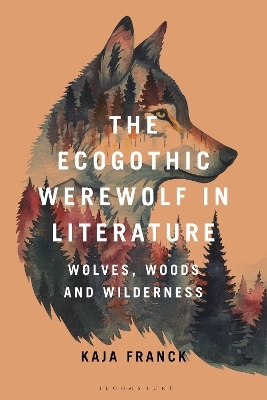
The Ecogothic Werewolf in Literature
Bloomsbury Academic (Verlag)
9781350441125 (ISBN)
Using an Ecogothic lens, this book offers a new conceptual framework for the werewolf in literature, recasting the lycanthrope as an emblem for society’s fear of untamed wilderness. Tracing lycanthropy from a place of liminality to hybridity and to myriad and complex subjectivities, The Ecogothic Werewolf in Literature reassesses the Gothic werewolf to show how the relationship between humans and wolves has influenced its representation in literature. Starting with Dracula and tracing lycanthropic imaginings through natural histories, folk and fairy tales to contemporary iterations in the works of Maggie Stiefvater, Whitley Strieber and Glen Duncan, Kaja Franck reconsiders the trope of the ‘beast within’ in the werewolf canon.
From early conservationist Aldo Leopold’s awakening regarding the death of wolves, to George Monbiot’s call to rewild, tensions around humanity’s responsibility to the natural world have emerged in lycanthropic literature. A challenge to previous anthropocentric analysis of Gothic horror’s stock monster, Franck considers the changing attitude towards wolves alongside the growing environmentalism movement and reclaims the wolf from the figure of the werewolf.
Kaja Franck is Lecturer in English Literature at the University of Hertfordshire, UK. She is the co-organiser of the 'Macabre Danse' research project, which is dedicated to exploring the intersection of dance and the gothic. Her research interests centre on the ecogothic and weird pedagogy, particularly monsters and monstrous animals, which is reflected in her teaching at both undergraduate and postgraduate level. She has previously published on the depiction of werewolves in Dracula (1897), the Canadian gothic and YA fiction, and organised international conferences on werewolves, vampires and faeries in literature and popular culture. More recently her publications include chapters on trolls and the Nordic Gothic for Religious Horror and the Ecogothic (2024, eds Kathleen Hudson and Mary Going), and the connections between Stephenie Meyer’s Twilight series (2005-08) and John Polidori’s The Vampyre (1819) for The Legacy of John William Polidori (2024, eds Sam George and Bill Hughes).
Introduction: The Shifting Werewolf: Bodies and Meaning Transformed
Chapter 1: Dracula: The Wolf in Vampire's Clothing
Chapter 2: The American Wilderness and the Werewolf
Chapter 3: The Werewolf in the Woods: Young Adult Gothic and Metaphoric Lycanthropy
Chapter 4: The Return of the Werewolf: The Monstrous Voice at Boundary between Human and Animal
Conclusion: The Hopeful Werewolf and the Environmental Apocalypse
Bibliography
Index
| Erscheinungsdatum | 31.07.2025 |
|---|---|
| Verlagsort | London |
| Sprache | englisch |
| Maße | 154 x 236 mm |
| Gewicht | 480 g |
| Themenwelt | Literatur ► Fantasy / Science Fiction ► Science Fiction |
| Literatur ► Krimi / Thriller / Horror ► Horror | |
| Geisteswissenschaften ► Sprach- / Literaturwissenschaft ► Anglistik / Amerikanistik | |
| Geisteswissenschaften ► Sprach- / Literaturwissenschaft ► Literaturgeschichte | |
| Geisteswissenschaften ► Sprach- / Literaturwissenschaft ► Literaturwissenschaft | |
| ISBN-13 | 9781350441125 / 9781350441125 |
| Zustand | Neuware |
| Informationen gemäß Produktsicherheitsverordnung (GPSR) | |
| Haben Sie eine Frage zum Produkt? |
aus dem Bereich