


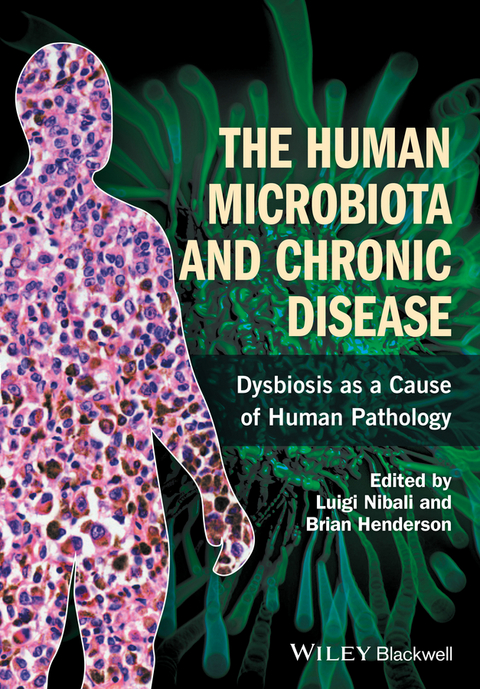
Human Microbiota and Chronic Disease (eBook)
Microbiota-associated pathology can be a direct result of changes in general bacterial composition, such as might be found in periodontitis and bacterial vaginosis, and/or as the result of colonization and/or overgrowth of so called keystone species. The disruption in the composition of the normal human microbiota, or dysbiosis, plays an integral role in human health and human disease.
The Human Microbiota and Human Chronic Disease: Dysbioses as a Cause of Human Pathology discusses the role of the microbiota in maintaining human health. The text introduces the reader to the biology of microbial dysbiosis and its potential role in both bacterial disease and in idiopathic chronic disease states.
Divided into five sections, the text delineates the concept of the human bacterial microbiota with particular attention being paid to the microbiotae of the gut, oral cavity and skin. A key methodology for exploring the microbiota, metagenomics, is also described. The book then shows the reader the cellular, molecular and genetic complexities of the bacterial microbiota, its myriad connections with the host and how these can maintain tissue homeostasis. Chapters then consider the role of dysbioses in human disease states, dealing with two of the commonest bacterial diseases of humanity - periodontitis and bacterial vaginosis. The composition of some, if not all microbiotas can be controlled by the diet and this is also dealt with in this section. The discussion moves on to the major 'idiopathic' diseases afflicting humans, and the potential role that dysbiosis could play in their induction and chronicity. The book then concludes with the therapeutic potential of manipulating the microbiota, introducing the concepts of probiotics, prebiotics and the administration of healthy human faeces (faecal microbiota transplantation), and then hypothesizes as to the future of medical treatment viewed from a microbiota-centric position.
• Provides an introduction to dysbiosis, or a disruption in the composition of the normal human microbiota
• Explains how microbiota-associated pathology and other chronic diseases can result from changes in general bacterial composition
• Explores the relationship humans have with their microbiota, and its significance in human health and disease
• Covers host genetic variants and their role in the composition of human microbial biofilms, integral to the relationship between human health and human disease
Authored and edited by leaders in the field, The Human Microbiota and Human Chronic Disease will be an invaluable resource for clinicians, pathologists, immunologists, cell and molecular biologists, biochemists, and system biologists studying cellular and molecular bases of human diseases.
About the Authors
Luigi Nibali is a Senior Clinical Lecturer in the Clinical Oral Research Centre, Institute of Dentistry, Queen Mary University London in London, UK.
Brian Henderson is a Professor of Microbial Diseases in the School of Life and Medical Sciences at University College London in London, UK.
Microbiota-associated pathology can be a direct result of changes in general bacterial composition, such as might be found in periodontitis and bacterial vaginosis, and/or as the result of colonization and/or overgrowth of so called keystone species. The disruption in the composition of the normal human microbiota, or dysbiosis, plays an integral role in human health and human disease. The Human Microbiota and Human Chronic Disease: Dysbioses as a Cause of Human Pathology discusses the role of the microbiota in maintaining human health. The text introduces the reader to the biology of microbial dysbiosis and its potential role in both bacterial disease and in idiopathic chronic disease states. Divided into five sections, the text delineates the concept of the human bacterial microbiota with particular attention being paid to the microbiotae of the gut, oral cavity and skin. A key methodology for exploring the microbiota, metagenomics, is also described. The book then shows the reader the cellular, molecular and genetic complexities of the bacterial microbiota, its myriad connections with the host and how these can maintain tissue homeostasis. Chapters then consider the role of dysbioses in human disease states, dealing with two of the commonest bacterial diseases of humanity periodontitis and bacterial vaginosis. The composition of some, if not all microbiotas can be controlled by the diet and this is also dealt with in this section. The discussion moves on to the major idiopathic diseases afflicting humans, and the potential role that dysbiosis could play in their induction and chronicity. The book then concludes with the therapeutic potential of manipulating the microbiota, introducing the concepts of probiotics, prebiotics and the administration of healthy human faeces (faecal microbiota transplantation), and then hypothesizes as to the future of medical treatment viewed from a microbiota-centric position. Provides an introduction to dysbiosis, or a disruption in the composition of the normal human microbiota Explains how microbiota-associated pathology and other chronic diseases can result from changes in general bacterial composition Explores the relationship humans have with their microbiota, and its significance in human health and disease Covers host genetic variants and their role in the composition of human microbial biofilms, integral to the relationship between human health and human disease Authored and edited by leaders in the field, The Human Microbiota and Human Chronic Disease will be an invaluable resource for clinicians, pathologists, immunologists, cell and molecular biologists, biochemists, and system biologists studying cellular and molecular bases of human diseases.
Luigi Nibali is a Senior Clinical Lecturer in the Clinical Oral Research Centre, Institute of Dentistry, Queen Mary University London in London, UK. Brian Henderson is a Professor of Microbial Diseases in the School of Life and Medical Sciences at University College London in London, UK.
Title Page 5
Copyright Page 6
Contents 7
List of contributors 19
Preface 23
SECTION 1 An introduction to the human tissue microbiome 27
Chapter 1 The human microbiota: an historical perspective 29
1.1 Introduction: the discovery of the human microbiota: why do we care? 29
1.2 The importance of the indigenous microbiota in health and disease 29
1.2.1 The indigenous microbiota and human disease 30
1.2.2 The indigenous microbiota and human health 30
1.3 The development of technologies for characterising the indigenous microbiota 34
1.3.1 Light microscopy 35
1.3.2 Electron microscopy 37
1.3.3 Culture-based approaches to microbial community analysis 38
1.4 Culture-independent approaches to microbial community analysis 55
1.5 Determination of microbial community functions 57
1.6 Closing remarks 58
Take-home message 58
References 59
Chapter 2 An introduction to microbial dysbiosis 63
2.1 Definition of dysbiosis 63
2.2 The ‘normal’ microbiota 64
2.3 Main features of dysbiosis 71
2.4 Conclusions 75
Take-home message 79
Acknowledgment 79
References 79
Chapter 3 The gut microbiota: an integrated interactive system 81
3.1 Introduction 81
3.2 Who is there, how is it composed? 82
3.3 A system in interaction with food 84
3.4 A system highly impacted by the host 87
3.5 A system in interaction with human cells 88
3.6 Conclusion: an intriguing integrated interactive system deserving further study 89
Take-home message 89
References 89
Chapter 4 The oral microbiota 93
4.1 Introduction 93
4.2 Composition of the oral microbiome 94
4.2.1 Archaea 94
4.2.2 Fungi 94
4.2.3 Protozoa 94
4.2.4 Viruses 95
4.2.5 Bacteria 95
4.3 The oral microbiota in health 97
4.3.1 Evolution of the oral microbiota 97
4.3.2 Role of oral bacteria in health 98
4.4 Role of oral microbiome in disease 99
4.4.1 Dental caries 99
4.4.2 Gingivitis 100
4.4.3 Oral bacteria and non?oral disease 100
4.5 Future outlook 101
Take-home message 101
References 102
Chapter 5 The skin microbiota 107
5.1 Normal skin 107
5.2 Skin diseases 109
5.2.1 Atopic dermatitis 109
5.2.2 Psoriasis 110
5.2.3 Acne 111
5.2.4 Rosacea 111
5.2.5 Seborrheic dermatitis and dandruff 112
5.2.6 Primary immunodeficiencies 112
5.3 Experimental studies 113
5.4 Dynamics of the skin microbiome 113
5.5 Axillary skin microbiome transplantation 115
5.6 Mouse skin microbiome studies 115
5.7 Concluding remarks 116
Take-home message 116
References 116
Chapter 6 Metagenomic analysis of the human microbiome 121
6.1 Introduction 121
6.2 The human microbiome 122
6.3 Changes in microbiota composition during host life cycles 123
6.4 The human microbiome and the environment 124
6.5 Disease and health implications of microbiome 125
6.5.1 The skin microbiota 125
6.5.2 The airway microbiome 125
6.5.3 Vaginal microbiome 126
6.5.4 Gut microbiota and disease 127
6.5.5 Metabolic disorders (obesity/diabetes) 129
6.6 Conclusions 131
Take-home message 131
References 132
SECTION 2 Microbiota-microbiota and microbiota-host interactions in health and disease 139
Chapter 7 Systems biology of bacteria?host interactions 141
7.1 Introduction 141
7.2 Computational analysis of host?microbe interactions 144
7.2.1 Analysis of metagenomic data 144
7.2.2 Metabolic reconstruction through comparative genomics 145
7.3 Network-based modeling 147
7.3.1 Topological network modeling 147
7.3.2 Constraint-based modeling 149
7.3.3 Metabolic reconstructions of human metabolism 150
7.3.4 Constraint-based modeling of host-microbe interactions 150
7.4 Other computational modeling approaches 153
7.4.1 Ordinary differential equation (ODE) models 153
7.4.2 Kinetic modeling 154
7.5 Conclusion 155
Take-home message 156
Acknowledgments 156
References 157
Chapter 8 Bacterial biofilm formation and immune evasion mechanisms 165
8.1 Introduction 165
8.2 Biofilms in human disease 165
8.3 Biofilm formation 167
8.4 Immune responses to biofilms 169
8.4.1 Innate immune responses 170
8.4.2 Adaptive immune responses 172
8.4.3 Fibroblasts, epithelial cells and other immune responses 173
8.5 Biofilm immune evasion strategies 173
8.6 Vaccines and biofilm therapeutics 174
8.7 Conclusions 175
Take-Home Message 175
References 176
Chapter 9 Co-evolution of microbes and immunity and its consequences for modern-day life 181
9.1 Introduction 181
9.2 Symbiosis in eukaryotic evolution 182
9.3 Evolution of the (innate and adaptive) immune system 183
9.3.1 Immune proteins 183
9.3.2 Evolution of adaptive immunity 184
9.3.3 Two separate adaptive immune systems evolved 184
9.4 Hygiene hypothesis 185
9.5 What drives the composition of the microbiota? 186
9.6 The pace of evolution 187
Take-home message 188
References 188
Chapter 10 How viruses and bacteria have shaped the human genome: the implications for disease 191
10.1 Genetic symbiosis 191
10.2 Mitochondria: symbiogenesis in the human 193
10.3 Viral symbiogenesis 195
10.4 HERV proteins 198
Take-Home Message 200
References 200
Chapter 11 The microbiota as an epigenetic control mechanism 205
11.1 Introduction 205
11.2 Background on epigenetics and epigenomic programming/reprograming 206
11.3 Epigenomics and link with energy metabolism 210
11.4 The microbiota as a potential epigenetic modifier 211
11.5 Epigenetic control of the host genes by pathogenic and opportunistic microorganisms 214
11.6 Epigenetic control of the host genes by indigenous (probiotic) microorganisms 215
11.7 Concluding remarks and future directions 217
Take-home message 219
References 219
Chapter 12 The emerging role of propionibacteria in human health and disease 225
12.1 Introduction 225
12.2 Microbiological features of propionibacteria 225
12.3 Population structure of P. acnes 227
12.4 Propionibacteria as indigenous probiotics of the skin 228
12.5 Propionibacteria as opportunistic pathogens 229
12.6 Host interacting traits and factors of propionibacteria 231
12.7 Host responses to P. acnes 232
12.7.1 Innate immune responses 232
12.7.2 Adaptive immune responses 233
12.7.3 Host cell tropism of P. acnes 234
12.8 Propionibacterium-specific bacteriophages 234
12.9 Concluding remarks 235
Take-home message 236
References 236
SECTION 3 Dysbioses and bacterial diseases: Metchnikoff’s legacy 241
Chapter 13 The periodontal diseases: microbial diseases or diseases of the host response? 243
13.1 The tooth: a potential breach in the mucosal barrier 243
13.2 The periodontium from health to disease 243
13.3 Periodontitis: one of the most common human diseases 245
13.4 Periodontal treatment: a non?specific biofilm disruption 246
13.5 Microbial etiology 246
13.6 The host response in periodontitis 247
13.7 Conclusions 249
Take-home message 249
References 249
Chapter 14 The polymicrobial synergy and dysbiosis model of periodontal disease pathogenesis 253
14.1 Introduction 253
14.2 A (very) polymicrobial etiology of periodontitis 255
14.3 Synergism among periodontal bacteria 256
14.4 Interactions between bacterial communities and epithelial cells 258
14.5 Manipulation of host immunity 259
14.6 Conclusions 263
Take-home message 264
References 265
Chapter 15 New paradigm in the relationship between periodontal disease and systemic diseases: effects of oral bacteria on the gut microbiota and metabolism 269
15.1 Introduction 269
15.2 Association between periodontal and systemic diseases 270
15.2.1 Periodontal disease and diabetes 270
15.2.2 Periodontal disease and atherosclerotic vascular diseases 271
15.2.3 Periodontal disease and rheumatoid arthritis 272
15.2.4 Periodontal disease and non?alcoholic fatty liver disease 272
15.2.5 Periodontal disease and pre?term birth 273
15.2.6 Periodontal disease and obesity 274
15.2.7 Periodontal disease and cancer 274
15.2.8 Periodontal disease and inflammatory bowel disease 275
15.3 Issues in causal mechanisms of periodontal disease for systemic disease 275
15.3.1 Endotoxemia (bacteremia) 275
15.3.2 Inflammatory mediators 277
15.3.3 Autoimmune response from molecular mimicry 277
15.4 New insights into the mechanisms linking periodontal disease and systemic disease 278
15.5 Effect of oral administration of P. gingivalis on metabolic change and gut microbiota 278
15.6 Conclusions 280
Take-home message 281
References 281
Chapter 16 The vaginal microbiota in health and disease 289
16.1 What makes a healthy microbiota 289
16.1.1 How does the vaginal microbiota mediate healthiness? 290
16.1.2 Establishment of the vaginal microbiota 290
16.1.3 The role of host genetic variation on vaginal health 290
16.1.4 Impact of age, menstrual cycle and environmental factors on vaginal health 291
16.2 The vaginal microbiota in disease 291
16.2.1 Bacterial vaginosis 291
16.2.2 Clinical consequences of altered vaginal microbiota (see Figure 1) 294
16.2.3 Vaginal microbiota and transmission and susceptibility to HIV infection 295
16.3 Conclusions 295
Take-home message 295
References 296
SECTION 4 Dysbioses and chronic diseases: is there a connection? 299
Chapter 17 Reactive arthritis: the hidden bacterial connection 301
17.1 Introduction 301
17.2 Reactive arthritis 302
17.3 Pathophysiology of ReA 303
17.4 Questions remain 305
17.5 Conclusion 306
Take-Home Message 306
References 306
Chapter 18 Rheumatoid arthritis: the bacterial connection 309
18.1 Preclinical rheumatoid arthritis 309
18.2 Predisposition to RA 310
18.3 MCH-HLA and genetic predisposition to RA 310
18.4 Molecular mimicry in RA 311
18.5 Innate immune system and RA 311
18.6 Bystander activation and pattern recognition receptors 312
18.7 Antibodies and neoepitopes 313
18.8 Superantigens 313
18.9 LPS 313
18.10 Bacterial DNA and peptidoglycans 314
18.11 Heat-shock proteins 314
18.12 Toll-like and bacterial infections 314
18.13 Proteus mirabilis 314
18.14 Porphyromonas gingivalis and RA 315
18.15 Gastrointestinal flora and RA 316
18.16 Smoking, lung infection and RA 317
18.17 Where to go from here? 317
Take-home message 317
References 318
Chapter 19 Inflammatory bowel disease and the gut microbiota 327
19.1 The microbiota in inflammatory bowel disease 327
19.2 Dysbiosis and IBD pathogenesis 327
19.3 Environmental factors affecting microbiome composition 328
19.3.1 Diet 328
19.3.2 Age 329
19.4 Genetics and application to the immune system and dysbiosis in IBD 329
19.5 An overview of gut microbiota studies in IBD 331
19.6 Specific bacterial changes in IBD 332
19.6.1 Potentiators 332
19.6.2 Protectors 333
19.6.3 Anti?inflammatory effects of microbiota (functional dysbiosis) 334
19.7 Functional composition of microbiota in IBD 334
19.8 Challenges 336
19.9 Conclusion 336
Take-home message 336
References 336
Chapter 20 Ankylosing spondylitis, Klebsiella and the low?starch diet 343
20.1 Introduction 343
20.2 Clinical features of AS 343
20.3 Gut bacteria and total serum IgA 344
20.4 Molecular mimicry in AS 345
20.5 Pullulanase system and collagens 346
20.6 Specific antibodies to Klebsiella in AS patients 347
20.7 The low-starch diet in AS 348
20.8 Conclusions 350
Take-home message 351
References 351
Chapter 21 Microbiome of chronic plaque psoriasis 353
21.1 Introduction 353
21.2 Microbiota in psoriasis 355
21.2.1 Bacteria 355
21.2.2 Fungi 356
21.3 Variation of microbiota with site 357
21.4 Swabs versus biopsies 357
21.5 Psoriatic arthritis 357
21.6 Microbiome and immunity 358
21.7 Evidence that the skin microbiome may be involved in the pathogenesis of psoriasis 358
21.7.1 Psoriasis and crohn’s disease 358
21.7.2 Genetic factors 359
21.7.3 Innate immunity 359
21.8 New hypothesis on the pathogenesis of psoriasis 360
Take-Home Message 360
References 361
Chapter 22 Liver disease: interactions with the intestinal microbiota 365
22.1 Introduction 365
22.2 Non-alcoholic fatty liver disease 365
22.3 Qualitative and quantitative changes in the intestinal microbiota 366
22.4 Endotoxin 367
22.5 Ethanol 368
22.6 Choline 368
22.7 Alcoholic liver disease 369
22.7.1 Qualitative and quantitative changes in the intestinal microbiome 369
22.7.2 Contribution of dysbiosis to alcoholic liver disease 370
Take-home message 372
References 372
Chapter 23 The gut microbiota: a predisposing factor in obesity, diabetes and atherosclerosis 377
23.1 Introduction 377
23.2 The “obesogenic” microbiota: evidence from animal models 377
23.3 The “obesogenic” microbiota in humans 378
23.4 A leaky gut contributing to inflammation and adiposity 378
23.5 Obesity-proneness: mediated by the gut microbiota? 379
23.6 Bacterial metabolites provide a link between bacteria and host metabolism 379
23.7 Fecal microbiota transplants: can we change our gut bacterial profiles? 380
23.8 What happens with the gut microbiota during weight loss? 380
23.9 The “diabetic” microbiota 381
23.9.1 Type I diabetes and the gut microbiota 381
23.9.2 Type II diabetes 381
23.10 The “atherosclerotic” microbiota 382
23.11 Conclusions 383
Take-home message 383
References 383
Chapter 24 The microbiota and susceptibility to asthma 387
24.1 Introduction 387
24.2 The microenvironment of the lower airways 387
24.3 Development of the airway microbiota in the neonate 388
24.3.1 Intrauterine microbial exposure and airway microbiota 388
24.3.2 Perinatal events and airway microbiota 389
24.3.3 Breast milk as a source of airway microbiota 390
24.3.4 Airborne microbiota and airway microbiota 390
24.4 Upper airway microbiota 390
24.5 What constitutes a healthy airway microbiota 391
24.6 Microbiota and asthma 391
24.7 Dietary metabolites and asthma 392
24.8 Conclusion, future perspectives and clinical implications 393
Take-home message 393
References 393
Chapter 25 Microbiome and cancer 397
25.1 Introduction 397
25.2 Microbiome and cancer: where is the link? 400
25.3 Microbiome and barrier disruption 402
25.4 Microbiome and different types of cancer 403
25.4.1 Colon cancer 403
25.4.2 Skin cancer 404
25.4.3 Breast cancer 405
25.4.4 Liver cancer 405
25.4.5 Local microbes affecting distant cancers 407
25.5 Microbiota and metabolism: the good and the bad sides 408
25.6 Chemotherapy, the microbiome and the immune system 410
25.7 Therapeutic avenues 411
25.7.1 Modulation of bacterial enzyme activity 411
25.7.2 Antibiotics 412
25.7.3 Pre- and probiotics 412
25.7.4 Fecal transplantation 412
25.8 Unresolved questions and future work 413
Take-Home Message 413
References 413
Chapter 26 Colorectal cancer and the microbiota 417
26.1 Introduction 417
26.2 Colon carcinogenesis and epidemiological data 418
26.2.1 Human carcinogenesis model 418
26.2.2 Age-related risk in the general population 419
26.2.3 Gene- and familial-related risks 419
26.2.4 Environment-related risk 420
26.3 The microbiota 420
26.4 Bacteria and CRCs links 421
26.4.1 Historical data 421
26.4.2 Clinical data 422
26.4.3 Experimental data and mechanisms involved 423
26.5 Hypotheses and perspectives 428
Take-home message 431
References 431
Chapter 27 The gut microbiota and the CNS: an old story with a new beginning 435
27.1 Introduction 435
27.2 The microbiota-gut-brain axis: a historical framework 436
27.3 The microbiota-gut-brain axis: an evolutionary perspective 437
27.4 The gut microbiota influence on brain and behavior 439
27.5 Microbes and the hardwired gut brain axis 441
27.5.1 The vagus 442
27.5.2 The enteric nervous system 443
27.6 Hormonal pathways to the brain 444
27.7 Microbes and immune pathways to the brain 446
27.8 Metabolites of the microbiota: short?chain fatty acids 447
27.9 Clinical implications of the microbiota?gut?brain axis 448
27.10 Conclusion 448
Take-home message 449
References 449
Chapter 28 Genetic dysbiosis: how host genetic variants may affect microbial biofilms 457
28.1 The holobiont: humans as supra?organisms 457
28.2 Genetic variants in the host response to microbes 458
28.2.1 Bacterial recognition pathway 458
28.2.2 Bacterial proliferation 459
28.3 Genetic dysbiosis 460
28.3.1 Genetic dysbiosis of oral biofilm 461
28.3.2 Genetic dysbiosis of gut biofilm 461
28.3.3 Genetic dysbiosis of skin biofilm 462
28.3.4 Genetic dysbiosis of vaginal biofilm 463
28.4 Summary and conclusions 464
Take-home message 464
References 464
SECTION 5 Mirroring the future: dysbiosis therapy 469
Chapter 29 Diet and dysbiosis 471
29.1 Introduction 471
29.2 Coevolution of the host?microbiota super?organism 471
29.3 Gut microbiota in personalized diets 472
29.4 The evolution of diet 473
29.5 Plasticity of the microbiota and diet 473
29.6 Interaction among gut microbiota, host and food 474
29.7 Consequences of diet?induced dysbiosis on host health 476
29.8 The role of gut microbes on the digestion of macronutrients 477
29.8.1 Carbohydrates 477
29.8.2 Proteins 477
29.8.3 Lipids 478
29.9 Diet induces dysbiosis in the host 478
29.9.1 Protein 479
29.9.2 Carbohydrates 479
29.9.3 Lipids 480
29.10 The effect of maternal diet on offspring microbiota 482
29.11 The effects of post?natal diet on the developing microbiota of neonates 483
29.11.1 Breast milk 483
29.11.2 Formula 484
29.12 Conclusion 485
Take-home message 485
Host-Food 486
References 486
Chapter 30 Probiotics and prebiotics: what are they and what can they do for us? 493
30.1 The gut microbiota, a partnership with the host 493
30.2 Probiotics 493
30.2.1 Probiotics, a story that began a long time ago 493
30.2.2 What are probiotics? 494
30.2.3 How do probiotics work? 494
30.2.4 Safety of probiotics 495
30.3 Prebiotics 496
30.3.1 What are prebiotics? 496
30.3.2 How do prebiotics work? 497
30.4 Synbiotics 497
30.5 Pro-, pre-, and synbiotics in human medicine today 497
30.5.1 Pro- and prebiotics and infectious diarrhea 497
30.5.2 Pro- and prebiotics and inflammatory bowel diseases 498
30.5.3 Pro- and prebiotics and irritable bowel syndrome 499
30.5.4 Pro- and prebiotics and allergy 500
30.5.5 Pro- and prebiotics and obesity and diabetes 501
30.5.6 Other indications 501
30.5.7 Pre- and probiotics in pediatrics 502
30.6 Concluding remarks 503
Take-home message 504
References 504
Chapter 31 The microbiota as target for therapeutic intervention in pediatric intestinal diseases 509
31.1 Introduction 509
31.2 Use of probiotics in pediatric intestinal diseases 510
31.2.1 Acute diarrhea 510
31.2.2 Inflammatory bowel diseases 512
31.2.3 Irritable bowel syndrome 513
31.2.4 Infant colic 513
31.2.5 Necrotizing enterocolitis 514
31.3 Fecal microbiota transplantation for treatment of intestinal diseases 514
31.3.1 Preparation and administration 514
31.3.2 Advantages and barriers 516
31.3.3 The use of FMT in specific intestinal diseases 516
31.4 Conclusion 518
Take-Home Message 519
References 519
Chapter 32 Microbial therapy for cystic fibrosis 523
32.1 Introduction: pathophysiology of cystic fibrosis 523
32.2 Intestinal inflammation in CF 524
32.3 Dysbiosis in CF 525
32.4 Microbial therapy in CF 528
32.5 Conclusion 530
Take-Home Message 530
References 530
Index 533
Supplemental Images 547
EULA 563
| Erscheint lt. Verlag | 5.8.2016 |
|---|---|
| Sprache | englisch |
| Themenwelt | Medizin / Pharmazie ► Medizinische Fachgebiete ► Mikrobiologie / Infektologie / Reisemedizin |
| Naturwissenschaften ► Biologie ► Mikrobiologie / Immunologie | |
| Technik | |
| Schlagworte | bacterial composition • Biowissenschaften • changes • Chronic • Chronische Krankheit • clinical microbiology • Colonization • Composition • Direct • dysbioses • General • Health • Human • infectious disease • Infektionskrankheiten • integral role • keystone species • Klinische Mikrobiologie • Life Sciences • Medical Science • Medizin • Microbiology & Virology • microbiota • microbiotaassociated • Mikrobiologie • Mikrobiologie u. Virologie • Normal • overgrowth • Pathology • Periodontitis • result • vaginosis |
| ISBN-10 | 1-118-98288-6 / 1118982886 |
| ISBN-13 | 978-1-118-98288-4 / 9781118982884 |
| Informationen gemäß Produktsicherheitsverordnung (GPSR) | |
| Haben Sie eine Frage zum Produkt? |
 PDF (Adobe DRM)
Kopierschutz: Adobe-DRM
Adobe-DRM ist ein Kopierschutz, der das eBook vor Mißbrauch schützen soll. Dabei wird das eBook bereits beim Download auf Ihre persönliche Adobe-ID autorisiert. Lesen können Sie das eBook dann nur auf den Geräten, welche ebenfalls auf Ihre Adobe-ID registriert sind.
Details zum Adobe-DRM
Dateiformat: PDF (Portable Document Format)
Mit einem festen Seitenlayout eignet sich die PDF besonders für Fachbücher mit Spalten, Tabellen und Abbildungen. Eine PDF kann auf fast allen Geräten angezeigt werden, ist aber für kleine Displays (Smartphone, eReader) nur eingeschränkt geeignet.
Systemvoraussetzungen:
PC/Mac: Mit einem PC oder Mac können Sie dieses eBook lesen. Sie benötigen eine
eReader: Dieses eBook kann mit (fast) allen eBook-Readern gelesen werden. Mit dem amazon-Kindle ist es aber nicht kompatibel.
Smartphone/Tablet: Egal ob Apple oder Android, dieses eBook können Sie lesen. Sie benötigen eine
Geräteliste und zusätzliche Hinweise
Buying eBooks from abroad
For tax law reasons we can sell eBooks just within Germany and Switzerland. Regrettably we cannot fulfill eBook-orders from other countries.
aus dem Bereich


